

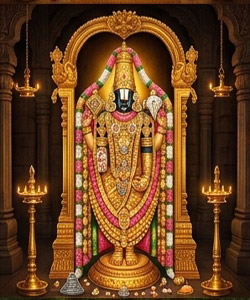
Venkateswara Temple
Swayambhu Lakshmi Venkateswara Swamy Temple Gudeballur
Sri Swayambhu Lakshmi Venkateswara Swamy Temple is located at Gudeballore in Telangana’s Narayanpet district, near the Krishna River. The name honours Lakshmi Venkateswara, the form of Vishnu worshipped at the shrine, while “Swayambhu” expresses the belief that the deity manifested of its own accord. The district administration places the temple in an area once called Gundilaranya and also records the older name Gundilapuram for the village. Its account describes the sanctuary as a historic pilgrimage place and preserves a local origin story centred on the sage Mandavya. This tradition is the heart of the temple’s identity: the sage was travelling to Tirupati for Brahmotsavam when the Krishna was in flood, and, according to the account, he received divine direction to remain in the forested area. He undertook tapas there, and Vishnu appeared to him as Venkateswara with Lakshmi.
The story also explains the temple’s association with the Golla community. The district account says that cowherds supplied milk to Mandavya Maharshi during his austerities and that families of this community have traditionally performed the pujas. This connection gives the legend a local social dimension: it links the deity’s appearance not only to a sage’s pilgrimage, but also to the care and service offered by people living in the surrounding countryside. The tale should be understood as the sacred origin tradition preserved by the district and temple community, rather than as a dated historical record. The same account identifies the site with the ancient landscape name Gundilaranya, presenting the shrine as an important point in the religious geography of the Krishna basin.
The most prominent annual observance is the temple’s Brahmotsavam in Chaitra month. The Narayanpet district page says the celebration lasts fifteen days, from Chaitra Padyami through Purnima, and attracts large numbers of devotees. A separate district account says pilgrims come from surrounding areas and from Karnataka and Maharashtra. These details indicate that the festival is a regional gathering, not only a village ceremony. Festival attendance can change from year to year, and the available official pages do not publish a current schedule of individual rituals or daily opening hours. Anyone planning a visit around the festival should check the latest dates and arrangements with the temple or local administration, because the Hindu lunar calendar shifts the dates relative to the Gregorian calendar.
Gudeballore’s rural setting is part of the experience. The temple is not described in the official information as a large urban monument or museum; it is presented as an active place of worship whose significance comes from the deity, the Mandavya story, community ritual, and the annual festival. The surrounding agricultural landscape also appears in local devotional life. The Mahabubnagar district account notes that pilgrims from nearby villages participate in the Brahmotsavam with agricultural implements, bullocks and carts, and that devotees associate the deity’s protection with good crops and safety from natural calamities. This is a statement of local belief and festival practice, not a guarantee of agricultural outcomes. It does, however, show how worship at the temple is woven into village life and seasonal concerns.
For visitors, the most meaningful approach is to treat the temple first as a community shrine. On an ordinary day, a visit may be quieter than during the Chaitra festival, while the Brahmotsavam brings a larger crowd and more activity. The district sources do not provide verified transport timetables, lodging information, phone numbers or current access rules, so these practical details should be confirmed locally before travelling. Visitors should follow instructions from temple staff, observe customary dress and conduct, and ask before taking photographs inside worship areas. The temple’s central image is Vishnu as Lakshmi Venkateswara, but the local story gives the site a distinctive identity through Mandavya Maharshi, the Krishna River and the Golla families’ role in worship. Together, these elements make Gudeballore a significant pilgrimage destination in the Narayanpet region and a place where legend, community service and annual celebration remain closely connected.