

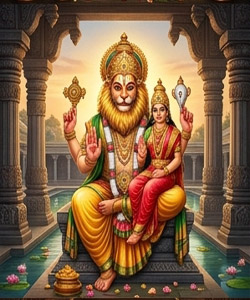
Narasimha Temple
Sri Penusila Lakshmi Narasimha Swamy Temple
Sri Penusila Lakshmi Narasimha Swamy Temple is situated at the foot of the Penchalakona Valley in Penchalakona village, Rapur mandal, Andhra Pradesh. The temple is dedicated to Lord Narasimha, worshipped here with Lakshmi, and the district administration identifies it as one of the region's important pilgrimage places. The shrine stands in a valley landscape and is associated with the Nava Narasimha tradition. The temple's official information describes the principal deity as swayambhu, or self-manifested, and records an annual five-day Brahmotsavam as the major festival.
The temple's sacred story is connected with Narasimha's appearance after the slaying of Hiranyakashipu. According to the temple account, the Lord remained in a fierce state until Lakshmi approached him in the form of Chenchu Lakshmi, a woman of the local tribal community. Their meeting brought a peaceful transformation, and the tradition says the two forms became manifest in interwoven rocks at Penchalakona. The name is explained through the Telugu phrase for embracing, penu vesukonuta. This is a devotional origin account and should be understood as temple tradition rather than a dated historical record. It gives the site a distinctive connection to Narasimha worship and the local landscape.
The main annual celebration is Brahmotsavam, which the district administration says begins on Vishakha Shuddha Ekadashi and lasts five days, usually in April or May. Festival dates vary with the Hindu calendar. The event is a major gathering for the area, with worship and temple activities drawing devotees from surrounding districts. Visitors planning to attend should check the current announcement from the temple or district administration. Crowd levels, service procedures and access may differ during the festival, and older online schedules may not reflect the current year's arrangements.
The temple is managed under the Andhra Pradesh Endowments Department, according to its official site, which identifies an executive officer responsible for day-to-day administration. The administration provides published information about darshan hours and services, but visitors should confirm current timings before setting out because they can change for special events. The official pages also give approximate distances from Rapur and Nellore. Road conditions and public transport availability vary, so it is useful to check a current route and arrange onward travel in advance, particularly for early morning or late evening visits.
Penchalakona combines a forested valley setting with active temple worship. Pilgrims should dress respectfully, follow the queue, respect the sanctum's customs and avoid disturbing the surrounding environment. Ask before taking photographs of rituals or people, and follow any restrictions announced by staff. Devotees may come to pray for protection, health or family wellbeing; such requests reflect personal faith and should not be treated as a guarantee of worldly outcomes. Sri Penusila Lakshmi Narasimha Swamy Temple remains important for its Narasimha devotion, the Chenchu Lakshmi tradition, the distinctive swayambhu belief and the annual Brahmotsavam that continues to bring the community together. Visitors can use the district page for location context and the temple's own channels for current notices. The surrounding valley is part of the pilgrimage experience, so respectful care for the natural setting is as important as following the customs of the shrine.