

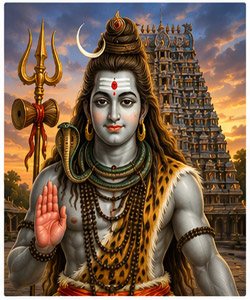
Lord Shiva as Mukhalingeswara Temple
Sri Mukhalingeswara Swamy Temple
Sri Mukhalingeswara Swamy Temple is a Shiva shrine at Srimukhalingam, on the left bank of the Vamsadhara River in Srikakulam district, Andhra Pradesh. The district administration describes the sacred site as a group of three temples dedicated to forms of Lord Shiva: Mukhalingeswara, Bhimeswara and Someswara. This larger setting matters to visitors because the name “Srimukhalingam” may refer both to the village and to its wider temple landscape, while the Mukhalingeswara shrine is the principal focus of this listing. The temples stand within a region whose religious history is closely linked to the Vamsadhara basin and to the historic Kalinga country. Government tourism material identifies the three shrines as important examples of the area’s temple heritage and describes the architecture as an Indo-Aryan style, with carved stonework and sculptural detail.
The complex is dedicated to Shiva, and worship continues through temple observances and pilgrimage. The Government of India’s Utsav portal lists Maha Shivaratri at Srimukhalingam as a festival dedicated to Lord Shiva, confirming the site’s ongoing devotional role. Maha Shivaratri is the major annual occasion when many devotees gather for prayer and worship. The precise programme, opening hours and crowd arrangements can vary from year to year, so visitors should confirm the latest details locally or through the temple administration before travelling. The festival’s importance is not only a matter of ceremony: for Shaiva devotees, the night of Shivaratri is associated with focused remembrance of Shiva, visits to shrines and observance of ritual worship. At Srimukhalingam, that wider devotional meaning is experienced in a setting where three Shiva temples form a connected sacred landscape.
The district’s description emphasizes the architecture and arrangement of the site. It notes an entrance with a large arched gateway, steps, an outer enclosure and a Nandi placed in a mandapa. Nandi, Shiva’s bull and devoted attendant, is a familiar feature at Shiva temples and marks the approach toward the principal shrine. The government account also draws attention to sculptural ornament and carved details across the temple structures. Rather than treating these features as decoration alone, visitors can read them as part of the visual language of Hindu temple worship: the gateway marks entry into a consecrated precinct, the enclosure organizes movement through the complex, and the Nandi pavilion establishes the devotional orientation toward Shiva. The district source does not provide a detailed construction chronology for every shrine, so dates or dynastic attributions should be checked against specialist archaeological sources rather than assumed.
Srimukhalingam is also associated with the larger historical and cultural landscape of northern Andhra Pradesh. The Utsav portal places the village in Jalumuru Mandal on the banks of the Vamsadhara and notes that the region served as a capital area of the Eastern Ganga rulers for several centuries. The temple group is described as evidence of the architectural skill of the Kalinga Ganga period. This context helps explain why the shrines appeal to both pilgrims and people interested in temple art and regional history. The spiritual experience remains central, however: the site is a place of worship, and visitors should approach it respectfully, especially when rituals are underway.
For a visit, allow enough time to see the three temple precincts and their river setting rather than treating the stop as a quick photo visit. Observe signs and instructions from temple staff, dress appropriately for a place of worship, and ask before photographing worshippers or ritual activity. The official district tourism page is useful for identifying the shrine group and its general location, but it does not publish a complete current visitor schedule or transport timetable. Plan those practical details separately and verify festival dates before making a special journey. Sri Mukhalingeswara’s combination of active Shiva worship, the neighbouring Bhimeswara and Someswara temples, the Vamsadhara landscape and finely worked architecture makes Srimukhalingam an important devotional and cultural destination in Srikakulam district.