

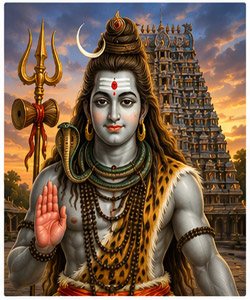
Shiva Temple
Sri Mandeswara Swamy Temple
Sri Mandeswara Swami Temple is located in Mandapalli village in the East Godavari region of Andhra Pradesh. The district administration presents it as a Shiva temple closely associated with Shani, the Hindu deity Saturn. Its main lingam is popularly known as Saneswara or Mandeswara, and the temple’s traditional account explains this connection through a narrative involving sage Dhadhichi, sage Agastya, Shani and a conflict with demons. The story links the shrine with worship intended to seek relief from difficulties attributed in Hindu belief to Saturn. These accounts are sacred traditions preserved by the temple and should be understood as religious narrative, not as independently verified historical events.
According to the district’s account, Mandapalli was once the hermitage of Dhadhichi Maharshi, whose legendary sacrifice of his spine made possible the creation of Indra’s Vajrayudha. The page then recounts how demons named Aswadha and Pippala caused trouble in the area. Agastya assured the people that Shani would defeat them, and Shani fought for a year before installing a Shiva lingam as an act of atonement. In this story, the shrine becomes known as Saneswara or Mandeswara because Shani installed and worshipped Shiva there. Devotees offer sesame oil and related offerings, which the district account associates with Shani’s worship. Ritual practices and offerings should be confirmed with the temple authority before visiting.
The temple precinct includes more than the principal shrine. The district page names Sri Brahmeswara Swamy, Sri Nageswara Swamy and Sri Venugopala Swamy among the other temples at Mandapalli. Each has its own traditional account: Brahma is associated with a sacrificial fire and the place-name Brahmagundam; Nageswara is linked with the serpent king Karkotaka; and Venugopala is connected with the Godavari and sages in the local sacred landscape. Visitors can therefore understand Mandapalli as a cluster of shrines with several layers of mythology rather than only one lingam. Local temple staff or priests can explain the worship order and customary practices.
The district lists Sri Swamivaru’s Kalyanam, Devi Navaratri, Karthika Masam, Lakshapatri Puja and Sani Trayodasi among the major festivals and observances. Some dates are given according to the Hindu lunar calendar and shift annually. The temple page includes an executive officer contact and notes limited visitor accommodation, but facilities and availability can change. Visitors should contact the devasthanam before planning an overnight stay or a special seva. The government page places Mandapalli approximately thirty-eight kilometres from Rajahmundry, sixty kilometres from Kakinada and thirty kilometres from Amalapuram. Check current route conditions and public transport information, as the published page is not a live travel service.
Worshippers often visit Mandeswara to perform pujas connected with Shani, but the temple’s account does not promise a particular result for any ritual. Visitors should treat the observances as expressions of faith. Dress modestly, follow directions at the shrines and ask before taking photographs. The temple’s significance lies in the Shani-associated Mandeswara lingam, the interconnected stories of the surrounding shrines and the ongoing festivals that draw devotees through the year. A visit can be both a pilgrimage and an opportunity to learn about the region’s living traditions, provided that current details are confirmed locally and sacred narratives are presented with care.