

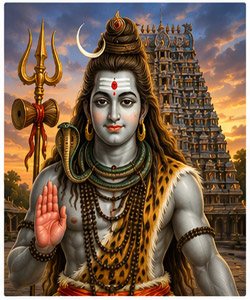
Lord Shiva (Lingaraj) Temple
Sri Lingaraj Temple
Sri Lingaraj Temple is one of the oldest and most important temples in Bhubaneswar, Odisha, and a landmark of Kalinga architecture. The presiding deity is Harihara, a form that unites Shiva and Vishnu, though the temple is principally associated with Shiva worship. The temple’s history is commonly linked with the Somavamsi rulers and the eleventh century. Its high curving tower, extensive stone carvings and carefully ordered temple complex make it one of eastern India’s most significant sacred and architectural sites.
The main sanctum enshrines a self-manifested linga, worshipped as Tribhuvaneshwara or Lingaraj. The Harihara identity is important: it expresses a tradition in which Shaiva and Vaishnava understandings coexist within the same sacred image. The temple’s ritual calendar and daily offerings sustain a large community of priests, sevayats and devotees. The surrounding complex includes multiple shrines and ritual spaces, while the nearby Bindu Sagar tank is closely tied to worship in Bhubaneswar’s old sacred quarter.
Lingaraj is celebrated for its Kalinga-style construction in red and grey sandstone. The main tower rises above the sanctum, with the jagamohana, natamandira and bhoga-mandapa arranged along the temple axis. Sculptural decoration covers much of the exterior and includes deities, guardians and ornamental motifs. The temple’s design is not simply decorative: each component supports a progression from public gathering toward the sanctum and the worship of the deity.
The annual Rukuna Rath Yatra is a major festival, carrying the deity through the city in a ceremonial chariot. Maha Shivaratri also attracts large crowds, with worshippers keeping vigil and making offerings. Non-Hindus are generally restricted from entering the inner temple precinct, though an external viewing platform allows visitors to appreciate the structure respectfully. Sri Lingaraj remains a living centre of worship and a defining symbol of Bhubaneswar’s religious identity, where architecture, ritual and the city’s sacred history remain closely connected.
Lingaraj is the central monument of Ekamra Kshetra, the historic sacred quarter of Bhubaneswar. Its towering rekha deul and the adjoining halls form a carefully composed sequence typical of Odisha’s mature temple architecture. The temple precinct contains numerous subsidiary shrines, reflecting the layered ritual life of the complex. The Bindu Sagar tank to the north is traditionally understood as a sacred reservoir representing waters from holy rivers and is connected with festival rites. Together, the main shrine, smaller sanctums and tank form a complete pilgrimage landscape.
The temple’s relationship with Bhubaneswar’s old city remains visible in the annual rites. Rukuna Rath Yatra, held in the month of Chaitra, is a major public procession, and the deity’s movement outside the complex brings the wider community into the festival. The temple’s many subsidiary shrines also reflect the region’s layered religious history, including forms of Shiva, Parvati, Ganesha and other deities. These features invite a longer visit, but worshippers should remember that access is regulated and the innermost ritual areas are reserved for those permitted by temple custom.