

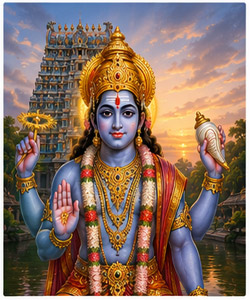
Lord Jagannath (Krishna) Temple
Sri Jagannath Temple
Sri Jagannath Temple in Puri, Odisha, is one of the most important Hindu pilgrimage centres in India and the principal shrine of Lord Jagannath. The temple is dedicated to Jagannath, a form of Krishna and Vishnu, along with his brother Balabhadra and sister Subhadra. Puri is one of the Char Dham pilgrimage destinations, and the temple remains a central focus of Vaishnava worship, regional culture and Odisha’s religious identity.
The main temple is generally dated to the twelfth century and associated with the Eastern Ganga ruler Anantavarman Chodaganga Deva. The complex is built in the Kalinga style, with a towering shikhara above the sanctum and a sequence of halls leading toward the deity. The wooden images of Jagannath, Balabhadra and Subhadra are renewed through the rare Nabakalebara ritual, which takes place at intervals according to the temple calendar. This cycle connects the temple’s worship with a distinctive understanding of the divine image as living and renewed.
The annual Rath Yatra is the temple’s best-known festival. The three deities are brought out from the sanctum and placed on massive chariots, which are pulled through the streets to the Gundicha Temple. Millions of devotees attend, making it one of the largest religious gatherings in the world. Other major observances include Snana Purnima, Chandan Yatra and the daily Mahaprasad offering, which is cooked in the temple’s kitchens and distributed to devotees.
The temple has specific entry restrictions: only Hindus are permitted inside the main precinct, while visitors of other faiths can view the complex from designated vantage points. Pilgrims should follow current rules on darshan, offerings, photography and crowd safety. Sri Jagannath Temple is not only an architectural landmark but a living centre of worship whose rituals, festivals and Mahaprasad traditions shape the spiritual life of Odisha and draw devotees from across the world.
The temple’s Mahaprasad tradition is one of the most important parts of worship at Puri. Food is prepared in the temple kitchens as an offering to Jagannath and then shared with devotees, expressing the belief that the deity’s grace reaches the community through food. The Rath Yatra and Nabakalebara are among many ritual observances that shape the temple year. The complex is governed by detailed customs, so pilgrims should follow official instructions on entry, darshan and offerings rather than relying on informal guides.
Mahaprasad is shared widely and is treated with reverence as food first offered to Jagannath.
The temple’s kitchen and food traditions remain under established temple administration.