

Bhagavathi Temple
Sree Thirumandhamkunnu devi temple
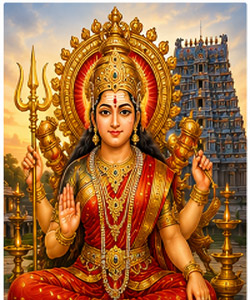
Sree Thirumandhamkunnu Devi Temple is a prominent Bhagavathy shrine in Angadippuram, Malappuram district, Kerala. The presiding deity is Thirumandhamkunnilamma, a powerful form of the Mother Goddess worshipped together with Shiva and Ganapati in the temple complex. The shrine is one of the most important Devi temples in northern Kerala and has a long association with the history of Valluvanad and the Mamankam festival.
The temple’s sacred legend tells of the Goddess’s arrival at Thirumandhamkunnu and her establishment as the protector of the region. The main deity is worshipped as a form of Bhadrakali, and devotees pray for protection, prosperity and wellbeing. The temple is also associated with the Valluvanad rulers, whose warriors are said to have departed from the shrine to participate in the Mamankam festival at Tirunavaya. This connection gives the temple a place in the political and cultural history of Malabar.
The annual Pooram festival is one of the temple’s major observances, featuring processions, ritual performances and the participation of devotees from surrounding villages. Navaratri and other Goddess festivals bring additional worshippers. The temple’s architecture reflects the Kerala style, with a large precinct and multiple shrines arranged around the central sanctum.
Visitors should check current festival dates and follow local customs regarding dress, photography and access. The temple remains an active centre of worship, and festival days can be crowded. Thirumandhamkunnu Devi Temple is significant for its Goddess worship, its association with Valluvanad and Mamankam, and its role in the regional pilgrimage tradition. It continues to serve devotees from across Malappuram and is one of the defining religious sites of northern Kerala.
Set on a hill at Angadippuram, the temple is one of Malappuram’s major centres of Bhagavathy worship. The presiding deity is revered as Bhadrakali, while a nearby shrine to Lord Shiva gives the complex a wider Shaiva-Shakta character. The hilltop setting makes the temple visible in the landscape and forms part of the experience of approaching the sanctum. Its annual Pooram is among the best-known festivals in the district, with processions, percussion, ritual offerings and Arattu observances. Angadippuram was historically associated with the Valluvanad polity, and this regional history is often discussed alongside the temple’s traditions; specific legends should be attributed to local belief. The shrine remains an active place of worship throughout the year, with the festival period drawing especially large numbers of devotees.
The Pooram season also reveals the temple’s role as a shared civic institution. Families, ritual specialists, artists and temple staff all contribute to the sequence of observances, from the opening ceremonies to processions and the concluding Arattu. The nearby town of Angadippuram has long served as a regional centre, and the temple’s hilltop position makes it a landmark within that setting. During major festival days, the approach roads become busy and the temple precinct functions as a large gathering place, so visitors should follow the arrangements set by the Devaswom and local authorities. The temple’s significance is therefore expressed both through its deity and through the community’s continued stewardship of the festival traditions.