

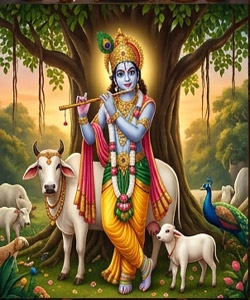
Krishna (Banke Bihari) Temple
Shri Banke Bihari Temple
Shri Banke Bihari Temple is one of the most famous Krishna temples in Vrindavan, Uttar Pradesh. The deity is worshipped as Banke Bihari, Krishna in a charming, tribhanga posture, bent at three places. The temple is a major centre of Braj pilgrimage and attracts devotees from across India and abroad. Its worship is closely associated with the traditions of Swami Haridas, the saint and musician who is revered as the founder of the temple.
According to tradition, Swami Haridas worshipped Krishna in the forests of Vrindavan, and the deity manifested before him in the form of Banke Bihari. The image was later installed in the temple, where it became the focus of daily seva. The temple’s darshan has a distinctive practice: a curtain is drawn across the deity at regular intervals. Local belief holds that Banke Bihari’s gaze is so captivating that devotees might become absorbed in the divine vision. The practice shapes the rhythm of darshan and is unique among Vrindavan’s major temples.
Daily worship follows the Braj seva tradition, with the deity awakened, adorned and offered food through the day. Janmashtami and Holi are especially important, with large crowds filling the temple lanes. The temple also observes Jhulan Yatra and other seasonal festivals. Visitors should check the current darshan schedule, as timings vary by season and festival.
The temple is located in the old lanes of Vrindavan, where crowd management can be challenging during peak periods. Visitors should follow local instructions and avoid pushing or blocking worshippers. Banke Bihari Temple is significant for its association with Swami Haridas, its unique curtain darshan and its central place in Krishna bhakti. It remains one of the most active and beloved shrines in Braj, where devotional music, seva and the presence of the deity shape the experience of pilgrims.
Banke Bihari is worshipped as Krishna in the charming childlike form central to Vrindavan’s devotional culture. The temple is associated with the saint Swami Haridas and the rasik tradition of Krishna bhakti, in which music, poetry and intimate devotion are important forms of worship. One distinctive practice is the repeated opening and closing of the curtain before the deity during darshan; devotees understand this as a way of regulating the intense exchange of loving vision between the Lord and worshippers. The shrine’s festival calendar includes Janmashtami, Holi, Jhulan and other occasions connected with Krishna’s life. Crowds can become very large on major days, and visitors should follow temple rules closely. Its importance rests less on monumental scale than on its central place in Vrindavan’s living devotional practices.