

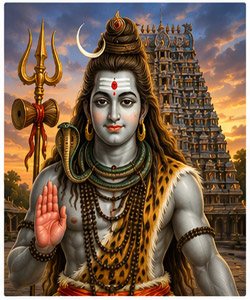
Shiva (Rangeshwar Mahadev) Temple
Rangeshwar Mahadev Temple
Rangeshwar Mahadev Temple is one of Mathura’s important Shiva shrines, located in the sacred city associated with Krishna’s birth and childhood. The temple is dedicated to Shiva as Rangeshwar Mahadev and is connected in local tradition with the wrestling arena where Krishna defeated the tyrant Kansa. The name Rangeshwar is associated with the arena, or rangashala, giving the shrine a distinct place within Mathura’s Krishna-related sacred geography.
A local legend says that Kansa worshipped the Shiva linga at this temple before arranging the wrestling contest intended to kill Krishna and Balarama. The story connects the shrine with one of the most dramatic episodes in Krishna’s life. It is a religious narrative preserved through local tradition, rather than a historical record of the exact temple’s construction. The temple’s identity reflects the layered character of Mathura, where Shiva shrines, Krishna temples and sites from the Puranic stories coexist.
Devotees visit for darshan and prayers to Mahadev throughout the year. Mondays, Maha Shivaratri and the month of Shravan bring special activity, while Krishna festivals in Mathura also draw pilgrims who may include the temple in a broader circuit. Worshippers offer water, flowers and bilva leaves to the linga and pray for strength and protection. The shrine serves the local congregation while welcoming visitors who explore the city’s sacred sites.
Visitors should allow time to find the temple within Mathura’s urban lanes and confirm current opening hours locally. The shrine is an active place of worship, so customary rules about dress, footwear, offerings and photography should be followed. Rangeshwar Mahadev is significant for its Shiva worship and for the tradition that links it to Kansa’s arena and Krishna’s victory. It provides a Shaiva dimension to a pilgrimage through Mathura and illustrates the way the city’s sacred geography brings different devotional traditions together.
Mathura’s history is inseparable from Krishna’s life, and Rangeshwar adds a Shaiva shrine to this predominantly Vaishnava pilgrimage setting. The legend of Kansa’s worship before the wrestling contest places Shiva within the narrative landscape of the city and gives devotees a way to connect the temple with Krishna’s victory. This is one reason pilgrims often include the shrine along with temples and ghats associated with the same episode. The tale should be understood as local sacred tradition, while the temple’s continuing Shiva worship remains its present-day religious purpose.
Visitors can approach the shrine as part of a Mathura pilgrimage while keeping the distinction between local tradition and written historical evidence clear.