

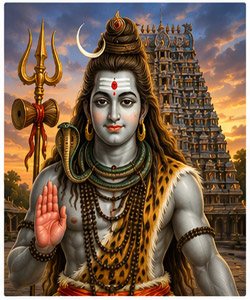
Shiva Temple
Pazhoor Perumthrikovil Mahadeva Temple, Piravom
Pazhoor Perumthrikovil is an ancient Shiva temple at Pazhoor, near Piravom in Ernakulam district, Kerala. The shrine stands beside the Muvattupuzha River, and its riverside location is central to its visual character and local sacred geography. Kerala’s Department of Archaeology describes the temple as a protected monument and dates its present architectural phase to around the twelfth century. It is especially notable for its large circular sanctum, an uncommon and impressive form among the state’s historic temples. The temple remains an active place of worship, so its heritage value is inseparable from daily ritual use.
The main shrine is a circular, sandhara-type structure, meaning that an ambulatory passage is incorporated around the sanctum. The Department of Archaeology records a massive circular adhishthana, or base, and a conical roof clad in copper sheets. These elements demonstrate how Kerala builders adapted stone foundations, timber construction and steeply pitched roofing to the region’s heavy monsoon climate. A shrine to Parvati is located behind the principal sanctum and faces west, creating a meaningful arrangement of Shiva and his consort within the complex. The building is valued not for a single towering gopuram but for its balanced proportions, careful construction and relationship with the river landscape.
Local accounts connect the temple’s construction or renovation with the legendary master-builder Perumthachan. This association is part of the region’s craft and temple tradition, but it should be presented as local belief rather than a securely documented date or authorship. The temple is also linked in local memory with the astrological institution at Pazhoor, reflecting the historic presence of ritual specialists in the area. These traditions help explain the shrine’s cultural standing while the archaeological description provides the firmer basis for its architectural chronology.
Worship centres on Shiva and follows Kerala temple practice, with the sanctum, subsidiary shrine, offerings and circumambulation forming the devotional focus. The river setting adds a quiet contemplative dimension, and visitors often experience the temple as part of the broader Piravom landscape rather than as an isolated monument. Festival observances bring the local community together, though dates and specific rites should be confirmed with the temple authorities. The protected status calls for care in the treatment of the historic fabric; it does not mean that the site is merely a museum. Pazhoor Perumthrikovil is both a living Mahadeva shrine and an important example of Kerala’s circular temple architecture.
For conservation, the temple’s circular plan and copper-covered roof are valuable evidence of a regional building tradition that can be overlooked when attention is limited to monumental towers. Its riverside position also places it among Kerala shrines whose sacred precincts were shaped by water access and seasonal landscape. These features make the temple useful for understanding both active worship and the historic craft knowledge involved in constructing a major Kerala shrine.