

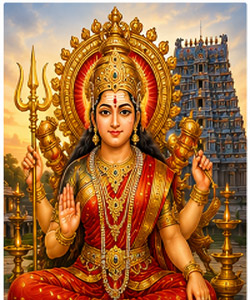
Bhagavathi Temple
Paramekkavu Bhagavathi Temple Thrissur
Paramekkavu Bhagavathy Temple is one of the largest and most prominent Devi temples in Kerala, situated in the heart of Thrissur close to Vadakkunnathan Temple. The presiding deity, Bhagavathy, is revered as a powerful form of the Goddess and is central to the identity of the temple and its community. Paramekkavu is best known as one of the two principal participants in Thrissur Pooram, Kerala’s celebrated annual temple festival. The temple combines daily worship with a major public ritual tradition that draws devotees and visitors from across India.
The Kerala Tourism Department identifies Paramekkavu as a major Bhagavathy temple and describes the Pooram procession from the shrine to Vadakkunnathan Temple, including the well-known display of caparisoned elephants. The Pooram itself was shaped in the late eighteenth century under Sakthan Thampuran, the ruler of Cochin, who brought participating temples together in an organized annual celebration. The Thrissur Corporation’s history of the festival also describes the central roles of Paramekkavu and Thiruvambadi. This origin makes the shrine especially important in understanding the civic and ceremonial history of Thrissur, where temple institutions and public celebration developed together.
During Pooram, Paramekkavu’s participation includes processions, percussion ensembles, decorated elephants and the famous parasol exchange. These are not merely performances: they form a sequence of offerings and ritual honour to the deities. The festival generally falls in Medam, around April or May, but the exact date varies with the Malayalam calendar. Thrissur becomes exceptionally crowded during the celebration, and visitors should consult current local advisories for access, traffic and safety guidance. At other times of year, devotees visit for daily puja and special observances, including Navaratri and the temple’s own annual rites.
The temple precinct is an active place of worship in a dense urban setting. Visitors should follow rules on clothing, footwear, photography and access to the sanctum, and should not interfere with ongoing puja or processions. Festival schedules can change and should be confirmed with temple announcements.
Paramekkavu Bhagavathy Temple matters as a major Shakti shrine, as a principal participant in Thrissur Pooram and as a historic institution in the cultural life of Kerala. Its enduring devotional role and public festival traditions connect the Goddess, the city and the wider region. A visit provides insight into both temple worship and the collective ceremonial culture for which Thrissur is known. The devaswom also maintains the routines that prepare the temple’s participation, including coordination with percussion groups and the elephant procession, which are part of the Pooram’s ritual structure.