

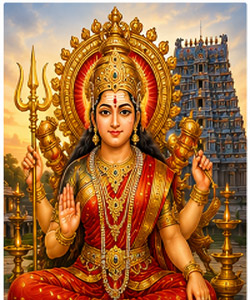
Oorpazhachi Daivathar, Vettakkorumakan and Bhagavathi Temple
Oorpazhachi Kavu
Sree Oorpazhachi Kavu is an ancient temple at Edakkad in Kannur district, Kerala. It is especially notable for its group of deities and the way Shaiva, Vaishnava and Shakta traditions meet within one sacred precinct. Kerala Tourism describes the shrine as dedicated to three deities, and temple sources identify Bhagavathy, Oorpazhachi Daivathar and Vettakkorumakan among the principal forms worshipped. This layered arrangement makes the temple distinctive in North Malabar, where local guardian deities and the classical Hindu pantheon often coexist within a shared ritual landscape.
The temple is associated with a body of local legends and ritual traditions that connect the shrine with the history of Edakkad and the surrounding region. The term kavu points to a sacred grove, and the temple’s identity remains tied to a traditional landscape rather than only to a monumental building. Stories about the deities are part of community memory and should be understood as local sacred tradition. The presence of multiple shrines within the complex allows worshippers to approach different divine forms according to their vows and family practices.
The annual calendar includes Mandala observances, with a 41-day ritual period beginning in the Malayalam month of Vrischikam and continuing into Dhanu. Shivaratri is also observed. North Kerala’s temple life is closely connected with local performance traditions, including Theyyam, though specific performance events should be confirmed with temple authorities rather than assumed to occur at every shrine. The temple’s daily worship and festival rites are maintained by the local community, and the precinct continues to serve as an active place of prayer.
Visitors can include Oorpazhachi Kavu in a wider exploration of the Kannur and Thalassery heritage landscape, but the shrine should be approached first as a living temple. Local rules govern entry, offerings and access to inner spaces. Festival periods may alter the normal schedule and draw larger crowds, so advance checking is useful. Its importance lies in the unusual presence of several devotional traditions within one complex, its connection to North Malabar’s sacred grove culture and its continuing role in the everyday religious life of Edakkad.
The temple’s multiple deities also reflect a distinctive feature of North Malabar religion: local forms of worship are not always separated into exclusive traditions, but can coexist in a shared sacred compound. This arrangement is part of the shrine’s cultural importance. Visitors should learn the temple’s own protocol before offering prayers at subsidiary shrines, as each may have a specific order of worship. Respectful observation helps preserve the living customs that distinguish Oorpazhachi Kavu.