

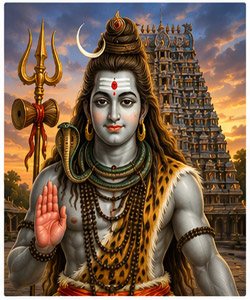
Lord Shiva (Omkareshwar) Temple
Omkareshwar Jyotirlinga Temple
Omkareshwar Jyotirlinga Temple is one of the twelve revered Jyotirlingas of Lord Shiva, located on Mandhata Island in the Narmada River in Madhya Pradesh. The island is traditionally said to resemble the sacred symbol Om, and the temple is a major destination for Shaiva pilgrims. The presiding deity is Omkareshwar, worshipped as a self-manifested linga, while the nearby Mamleshwar temple on the southern bank is also an important part of the pilgrimage.
The temple’s sacred history is explained through several Puranic traditions. One account tells of Vindhya, the mountain deity, who worshipped Shiva here and received a blessing, leading to the manifestation of Omkareshwar. Another links the site with King Mandhata, after whom the island is named. These stories explain the temple’s sanctity and should be understood as religious tradition rather than historical chronology. The Jyotirlinga status makes the shrine one of the central centres of Shiva worship in India.
Pilgrims undertake parikrama of Mandhata Island, visiting temples, ghats and sacred places along the route. The Narmada itself is revered as a holy river, and many visitors combine temple darshan with ritual bathing and prayers on the banks. Maha Shivaratri and the month of Shravan are especially important, bringing large gatherings and special pujas. The temple’s daily schedule includes abhishekam and offerings to the linga.
The island is connected to the mainland by bridges, and the temple trust provides current information on darshan and pilgrimage arrangements. Visitors should plan for crowds during festivals and allow time for both Omkareshwar and Mamleshwar. Omkareshwar is significant for its Jyotirlinga, the sacred Om-shaped island, and the Narmada pilgrimage tradition. It remains one of India’s great living Shiva sanctuaries, where ritual worship and the geography of river and island are inseparable.
The official temple trust describes Omkareshwar as a major pilgrimage destination on the Narmada, with Mamleshwar across the river forming a closely associated shrine. Many devotees visit both temples in one journey, and some traditions understand the two sanctums as complementary aspects of the same Jyotirlinga. The island parikrama takes pilgrims past several shrines, ghats and sacred viewpoints. It is a physically active visit, and visitors should allow time for the walking route, river crossings and queues. The temple’s position on the northern bank and the island’s distinctive shape make geography central to the pilgrimage.
The Narmada is worshipped as a goddess, and bathing or prayer at the ghats is often part of the same pilgrimage. Devotees should follow local river safety notices, especially when water levels rise.