

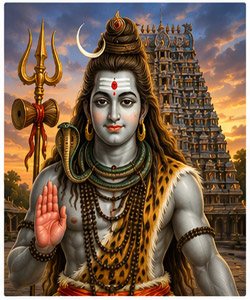
Shiva Temple
Mammiyur Sri Mahadeva Temple
Mammiyur Sri Mahadeva Temple is an important Shiva shrine in Mammiyoor, beside the famous Guruvayur temple complex in Thrissur district, Kerala. It is dedicated to Lord Shiva, worshipped as Mahadeva, with Goddess Parvati seated beside him in the Uma-Maheshwara form. Kerala Tourism specifically notes the temple’s mural paintings and its close relationship to Guruvayur, making it a natural part of the pilgrimage landscape for devotees who travel to worship Lord Krishna at Guruvayur.
A temple legend connects Mammiyur with the consecration of the Guruvayur Krishna image. In the traditional account, when Guru and Vayu established the Krishna shrine at Guruvayur, Shiva and Parvati chose a neighbouring place for their own abode. The name Mammiyur is explained in local tradition through the divine greatness or mahima associated with this presence. The story is an important expression of how devotees understand the relationship between the two temples: worship of Krishna at Guruvayur and reverence for Shiva at Mammiyur belong to a connected sacred itinerary. It is a religious narrative, not a claim about an archaeologically dated event.
The main shrine’s depiction of Shiva with Uma gives the temple a distinct devotional character. Its worship includes the customary offerings made to Shiva, with daily rituals and special observances on Mondays, Pradosham and Maha Shivaratri. The murals add visual depth to the interior and form one of the temple’s notable features. They are part of the wider Kerala tradition in which sacred images and painted narratives support worship and help convey religious themes to visitors.
Many pilgrims make a point of visiting Mammiyur after darshan at Guruvayur, and the temple is consequently woven into the routine of a major pilgrimage town. This relationship should not obscure its own identity: Mammiyur is an active Shiva temple with a separate sanctum, daily worship and a history cherished by its congregation. Visitors should check current local arrangements, respect dress and photography rules, and allow time for darshan rather than treating the shrine as a brief add-on. The temple’s significance lies in the presence of Mahadeva, the murals and the traditional bond with the neighbouring Krishna shrine.
The temple’s own traditional account tells how Shiva and Parvati made their abode near the newly consecrated Krishna at Guruvayur, preserving a spiritual balance between Vaishnava and Shaiva worship in the same pilgrimage town. Kerala Tourism notes that Parvati sits to Shiva’s left and that the shrine is especially known for its murals. These visual works, together with the paired Uma-Maheshwara image, make the main shrine’s iconography particularly significant. Devotees who visit after Guruvayur darshan often regard Mammiyur as completing the circuit, yet the temple’s own daily pujas and festival observances remain independent and meaningful in their own right.