

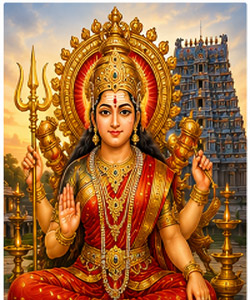
Goddess Durga (Malini) Temple
Malinithan Temple
Malinithan is an important archaeological and pilgrimage site near Likabali in Arunachal Pradesh, at the foothills of the Siang range. The surviving remains belong to an early medieval Hindu temple complex, generally dated between the tenth and fourteenth centuries. Archaeological work has exposed temple foundations, a substantial plinth, carved pillars and numerous sculptural fragments, showing that this was once a carefully planned sacred centre rather than an isolated shrine. The site’s stone images include representations of Shiva, Parvati, Durga, Ganesha, Kartikeya, Surya, Indra and Nandi. These works reveal a rich religious vocabulary in which Shaiva, Shakta and Vaishnava associations could coexist within one temple landscape. The sculptural style and architectural fragments are also important for the history of temple building in the eastern Himalaya, where artistic connections crossed today’s state and national boundaries. Malinithan is linked to a well-known legend about Krishna and Rukmini. On their journey after eloping, they are said to have stopped at the hermitage of the goddess Malini, who welcomed them with flowers; the name Malinithan is traditionally interpreted as the abode of Malini. This story belongs to sacred tradition and should be distinguished from what archaeology can establish about the original temple. The contrast between the mythic account and the excavated remains is part of the site’s appeal: visitors encounter both a landscape shaped by local memory and physical evidence of a major medieval religious centre. The older ruins are protected heritage, while a modern temple at the site supports continuing worship and pilgrimage. This distinction matters because Malinithan is not simply a functioning ancient building preserved intact; it is an archaeological complex with a present-day devotional life. Pilgrims visit the shrine, while students and travellers come to see the sculpture and learn about the region’s early history. The setting above the plains, near the Assam border, gives the site a strong relationship to the surrounding hills and river routes. Malinithan is especially valuable for understanding how Hindu religious art and local traditions developed in Arunachal Pradesh, and why this remote place became a recognised centre of worship and cultural exchange. The distinction between the ruins and present-day shrine is important for anyone describing the site: the modern temple provides a setting for worship, while excavated foundations and detached images are evidence for the earlier complex. Together, they allow visitors to approach Malinithan from both devotional and historical perspectives. The setting in the foothills also places the site along an old zone of contact between the Brahmaputra valley and the hill communities to its north. This helps explain why the place is significant beyond its sculptures alone: it records religious art and cultural interaction at the eastern edge of the subcontinent.