

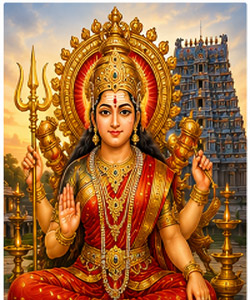
Goddess Ramachandi Temple
Maa Ramachandi Temple
Maa Ramachandi Temple is a Shakti shrine at the mouth of the Kushabhadra River on the coast between Puri and Konark in Odisha. The Puri district administration places it about seven kilometres before Konark on the Marine Drive route and identifies Goddess Ramachandi as the presiding deity of Konark. The setting beside the river and near the sea gives the temple a distinctive coastal character, but the heart of the site is the worship of the Goddess as a compassionate and protective form of Chandi.
Local tradition regards Ramachandi as an ancient guardian of the Konark region and associates her temple with a sacred landscape that predates the Sun Temple at Konark. A story preserved in Odisha links the shrine with the threat posed by the iconoclast Kalapahad: the Goddess is said to have been moved from a temple within the Konark complex to the river mouth for protection. Accounts differ in detail, and the story belongs to local religious memory rather than a securely documented chronology. The temple’s reputation as a Shakti Peetha is also part of its devotional identity.
The sanctuary is a place of regular worship for local devotees and pilgrims travelling between Puri and Konark. The river mouth, nearby beach and coastal road make the area popular with visitors, but the temple should not be reduced to a scenic stop. Darshan of Ramachandi and participation in worship remain the central reasons for visiting. Goddess-focused festivals, including Navaratri and other annual observances, bring special devotional activity to the shrine. Visitors should check local arrangements, as access and crowd conditions can vary by season.
Maa Ramachandi Temple is significant for the way it combines Shakta worship, local legend and coastal geography. Devotees see the Goddess as the protector of the Konark region, while the temple’s location makes the river itself part of the sacred setting. Visitors can approach the shrine as part of a pilgrimage itinerary, but should allow time for prayer and follow customary rules. The district administration lists Bhubaneswar as the nearest airport, with Puri and Konark providing road access. The temple remains a living focus of worship and regional devotion.
The official Puri district account emphasizes both the temple’s religious standing and its position at the river mouth, while also acknowledging that its architectural importance is modest compared with the nearby Sun Temple. This is a useful distinction: Ramachandi is not primarily valued for monumental construction, but for the Goddess’s place in local devotion and for her traditional role as presiding deity of Konark. The river and sea landscape supports the pilgrimage setting, yet darshan and prayer remain the purpose of a visit. The district notes the shrine lies on the Puri–Konark Marine Drive and is accessible from the regional road network.