

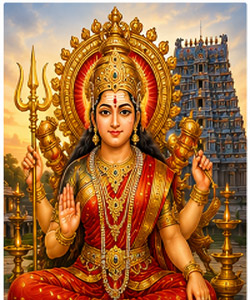
Goddess Kichakeswari Temple
Maa Kichakeswari Temple
Maa Kichakeswari Temple stands at Khiching in Mayurbhanj district, northern Odisha. It is dedicated to Kichakeswari, a form of the Goddess identified in temple tradition with Chamunda, and has long been associated with the Bhanja rulers of the region. Khiching was an important historical centre of the Mayurbhanj kingdom, and the temple’s status as a royal and regional shrine helps explain why it became one of the most significant sacred places in northern Odisha. It remains a place of worship today, while the surrounding archaeological landscape makes it valuable to visitors interested in the history of the region.
The present temple is a carefully reconstructed stone shrine. The Odisha Hindu Religious Endowment Commission describes its rebuilding as the result of a ruler’s persistence and the dedication of an Archaeological Survey of India supervisor. The renovated structure follows the Odisha style of temple architecture, but has an unusual plan because it lacks the separate jagamohana, or assembly porch, commonly found in larger Odishan temples. This compact arrangement gives the shrine a distinctive profile. The dark chlorite stone used in the temple is finely worked, and the sculptural detail is a major reason the building is admired as an architectural landmark. The shrine should be distinguished from the wider collection of archaeological remains at Khiching: the present temple is an active place of worship, while nearby sculptural fragments, old foundations and museum objects help document the older religious centre.
Khiching’s importance extends beyond a single building. The area contains evidence of a long history of political patronage and religious activity under the Bhanja dynasty. The presence of Hindu, Buddhist and Jain material in the region indicates that its cultural life was not limited to one community or one period. The temple’s dedication to the Goddess belongs to a powerful Shakta tradition, and Kichakeswari is revered as a protective deity with special importance for Mayurbhanj. Pilgrims come to make offerings and pray; those studying the site can also examine how royal devotion, local worship and stone craftsmanship were brought together in a temple landscape.
The temple is best visited as part of a broader exploration of Khiching, allowing time for both worship and the archaeological setting. Visitors should remember that the central shrine is an active religious space and follow local instructions regarding entry, photography and ritual areas. The site is not simply a museum piece: worship continues, and the deity’s place in community life gives meaning to the monument. Kichakeswari Temple is therefore significant as a living Shakti shrine, a symbol of the Bhanja-era heritage of Mayurbhanj and a distinctive example of Odisha’s stone temple craft. Its blend of devotion and historical evidence makes it one of the most compelling destinations in the district.