

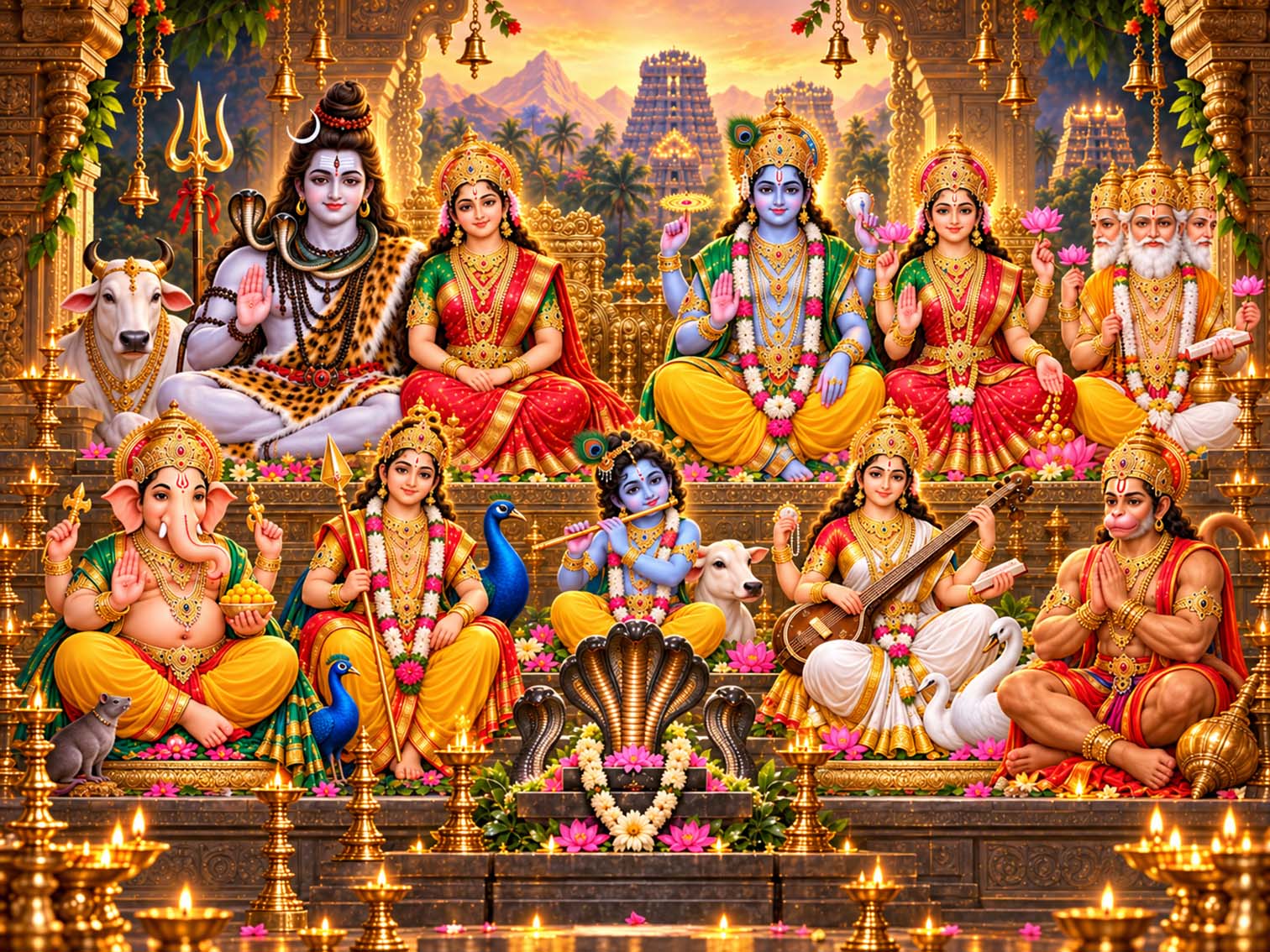
Lord Vishnu and Goddess Lakshmi Temple
Lakshmi Narayan Birla Mandir
Lakshmi Narayan Birla Mandir in Bhopal, Madhya Pradesh, is a prominent shrine dedicated to Vishnu and Lakshmi. The temple is commonly known as Birla Mandir and stands on Arera Hills, overlooking the city and the Upper Lake. Its elevated location gives visitors a broad view of Bhopal, but the primary purpose of the site is worship of Lakshmi Narayan. The temple is one of the city’s best-known religious landmarks and a familiar destination for residents and visitors.
The main sanctum houses images of Vishnu and Lakshmi, and the temple complex includes shrines to other Hindu deities. Its architecture combines North and South Indian influences, with carved surfaces and a spacious, carefully maintained precinct. The design brings together a devotional interior and a setting that opens onto the surrounding landscape. The temple’s name links it to the Birla family, whose patronage has supported several major temples across India during the twentieth century.
Daily darshan and puja continue throughout the year. Janmashtami, Diwali and other Vaishnava and Hindu festivals bring special worship and larger crowds. Devotees offer prayers for prosperity, wellbeing and protection, while visitors may also appreciate the temple’s setting and craftsmanship. The nearby museum and garden area sometimes form part of a broader visit, but the shrine itself remains an active religious place.
Visitors should follow temple rules regarding footwear, photography and access to the sanctum. The hilltop location is convenient to reach from central Bhopal, and the views are especially clear in the cooler months. Lakshmi Narayan Birla Mandir matters as a place of worship and as a modern landmark that reflects the city’s religious and architectural life. It provides a quiet setting for darshan while also offering a vantage point over Bhopal’s lakes and neighbourhoods.
The temple is also associated with the Birla Museum, which preserves sculptures and objects connected with the artistic history of Madhya Pradesh. This makes the hilltop precinct useful for understanding both current worship and the region’s material heritage. The open setting and gardens allow visitors to pause after darshan, but the sanctum remains the centre of the visit. On festival days, special decorations and aarti bring a larger congregation, while weekday visits are often quieter. The temple is accessible from Bhopal’s central neighbourhoods and is commonly included in city sightseeing routes.
The museum collections and surrounding gardens make the site a useful cultural stop, but worshippers continue to use the sanctum for regular darshan and prayer.