

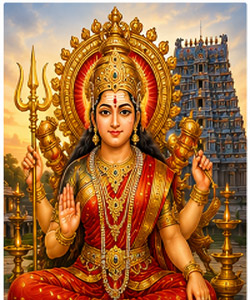
Bhagavathi Temple
Kodungallur Sree Kurumba Bagavathi Temple
Kodungallur Sree Kurumba Bhagavathi Temple is a major Shakta shrine in Kodungallur, Thrissur district, Kerala. The presiding deity is Bhagavathi, worshipped as a powerful form of the Goddess, and the temple is one of the most influential centres of Devi worship in the state. Kodungallur itself is an ancient port and historic town, known by several names in different periods and situated near the Arabian Sea. The temple’s place in this long-lived urban and maritime landscape helps explain its far-reaching religious and cultural importance.
The temple is deeply connected with local traditions surrounding the Goddess and with the annual Bharani festival. The Kodungallur Municipality describes the shrine as an ancient centre of Shakta worship and associates its tradition with Cheran Chenguttuvan. Such claims belong to the town’s historical memory and sacred tradition; they should not be treated as a precise archaeological date for the existing structure. The shrine’s present importance is evident in the scale of worship and the way devotees from many parts of Kerala continue to regard Kodungallur as a principal seat of the Goddess.
Kodungallur Bharani is the temple’s best-known festival. It takes place in the Malayalam calendar around the Bharani days of Kumbham and Meenam, typically March or April. The festival is associated with intense devotional expression, ritual songs and the participation of oracles. Some historical practices have changed over time, and descriptions should avoid presenting prohibited or discontinued rites as current. The festival’s meaning is tied to the Goddess’s fierce protective power and to a distinctive regional form of Shakta devotion. Because large crowds gather, visitors should follow current temple and local guidance, respect the people performing ritual roles and remember that the event is a sacred observance rather than a spectacle staged for tourists.
The temple’s location in Kodungallur also places it in a town shaped by centuries of trade and cross-cultural contact. The municipality notes the presence of Jewish, Christian and Islamic religious histories alongside the town’s Hindu sacred sites. This broader context is useful, but the temple should be described on its own terms as a centre of Bhagavathi worship. The surrounding town’s historical importance and the shrine’s religious role meet in a distinctive way: Kodungallur has long served as both a place of exchange and a major sacred destination.
Daily worship continues throughout the year, with devotees coming for darshan, offerings and prayers. The temple’s architecture and ritual precinct are governed by customary rules, so visitors should dress modestly and follow instructions on entry, photography and conduct. Kodungallur Sree Kurumba Bhagavathi Temple is significant as a major Shakta centre, as the focus of the Bharani festival and as a living shrine within one of Kerala’s oldest historic towns. Its importance rests on continuing worship and regional tradition as much as on its ancient reputation.