

Bhagavathi Temple
Kodikkunnu Bhagavathy Temple
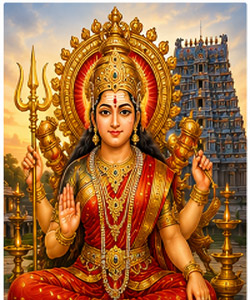
Kodikkunnu Bhagavathy Temple, also known locally as Kodikkunnathamma’s shrine, stands on a small rise at Pallippuram near Pattambi in Palakkad district, Kerala. The presiding deity is Bhagavathi, worshipped as a form of the Mother Goddess and identified in local accounts with Bhadrakali. The shrine is part of a closely connected religious landscape that includes other temples and village ritual centres in the Pattambi region. Its hilltop position and community festivals give it a strong local identity, while the temple’s own Devaswom maintains information about its observances and administration.
The temple is not devoted to the Goddess alone. Shiva and Ganapati also have shrines in the complex, and the combination reflects the layered character of Kerala temple worship, where a principal deity is often honoured alongside other deities with their own ritual presence. Temple descriptions commonly note separate approaches and distinct shrine orientations, but these details should not be taken as a substitute for the living customs followed by the priests and worshippers. For visitors, the most useful way to understand Kodikkunnu is as an active Bhagavathi temple whose ritual geography links the hill, the sanctum and the surrounding village communities.
One of the best-known local traditions concerns a poor widow who lived across the river and supplied milk to the temple. A flood is said to have prevented her from crossing; an old woman then brought food to her children, and a vessel later proved to be missing from the shrine. Devotees interpret the story as a sign of the Goddess’s compassion and personal care for her worshippers. It is a sacred legend, not a documented historical episode, but it conveys a central theme of local devotion: the deity is not remote from ordinary household hardship. Such stories help explain why local temples are remembered through relationships and acts of care as much as through dates or architectural features.
The temple is associated with seasonal festivals including Pooram observances and Kathiratta Vela. These gatherings combine worship with regional performance traditions and bring residents of nearby desams into shared activity. Processional music, percussion and decorated festival forms are part of Kerala’s broader temple culture; exact programme details vary by year and should be confirmed locally. Festival days can be crowded, so visitors should follow temple directions and avoid obstructing processions or ritual work. Daily puja continues outside the major celebrations, and devotees come throughout the year for darshan, offerings and family prayers.
Kodikkunnu’s significance lies in the way its Goddess worship, local legend and festival life remain tied to the landscape of Pallippuram. It is not a monument whose meaning depends on a famous royal foundation or a single architectural feature. Rather, the temple serves as a community centre and a place where the protective and compassionate aspects of Bhagavathi are approached through regular ritual. Visitors can appreciate the setting and regional traditions while remembering that worshippers use the temple as a sacred space. Respectful dress, quiet conduct and attention to any photography or entry rules make it possible to experience the shrine without disrupting its devotional life.