

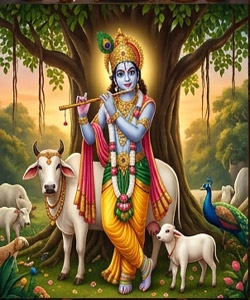
Radha Krishna Temple
ISKCON Temple
ISKCON Temple Ujjain is a Krishna temple and spiritual centre of the International Society for Krishna Consciousness, located near Nanakheda in Ujjain, Madhya Pradesh. It is dedicated to Krishna and Radha, whose worship forms the heart of the Gaudiya Vaishnava tradition followed by ISKCON. The temple welcomes local devotees, students and pilgrims visiting Ujjain, a city better known for its ancient Shaiva shrines. Its presence adds a contemporary Vaishnava centre to the city’s diverse religious landscape.
The Ujjain district administration identifies the ISKCON temple as a popular Krishna temple near the Nanakheda Bus Stand. The local ISKCON centre states that its temple was inaugurated in 2006. This makes it a relatively modern institution compared with Ujjain’s ancient pilgrimage sites, while its theology draws on the devotional teachings of Chaitanya Mahaprabhu and the international movement established by A. C. Bhaktivedanta Swami Prabhupada. The temple’s history is therefore best understood through its role as a contemporary devotional and educational centre.
Daily worship includes darshan, arati, chanting and devotional offerings. ISKCON temples commonly emphasize kirtan and the recitation of the Hare Krishna mantra, and the Ujjain centre hosts spiritual programmes and festivals linked with Krishna’s life. Janmashtami, the celebration of Krishna’s birth, and Gaura Purnima are major occasions in the broader ISKCON calendar. Visitors should consult the temple’s current schedule to confirm times and programme details, since these can vary by festival and season.
The temple is accessible from central Ujjain and the Nanakheda transport area. Visitors may attend worship and participate in public programmes, subject to the temple’s guidelines. Modest dress and respectful conduct are expected, and visitors should follow directions regarding footwear, photography and access to the altar area. The temple’s facilities and programmes may be busier during major festivals.
ISKCON Temple Ujjain is important as a living centre of Krishna devotion, as a modern religious institution in a historically sacred city and as a place where congregational worship and spiritual education are accessible to visitors. Its daily chanting, festival celebrations and devotional service offer a distinct experience alongside Ujjain’s older temple traditions. A visit helps show the variety of contemporary Hindu practice within one of India’s major pilgrimage cities. The centre’s approach combines individual devotional practice with group worship, offering visitors a contemporary form of Krishna bhakti alongside Ujjain’s older temple traditions. The temple’s religious programme also reflects the wider ISKCON emphasis on scripture, service and devotional singing every day.