

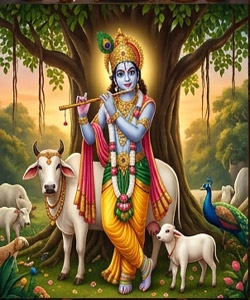
Radha-Krishna Temple
ISKCON Juhu Sri Sri Radha Rasabihari Temple
Sri Sri Radha Rasabihari Temple at Juhu, Mumbai, is the principal shrine of ISKCON Juhu, located at Hare Krishna Land near Juhu Beach. The temple is dedicated to Krishna and Radha in the form of Sri Sri Radha Rasabihari. The temple’s official account says that A. C. Bhaktivedanta Swami Prabhupada inspired its construction and personally installed the presiding deities. The complex also houses shrines for Sri Sri Gaura-Nitai and Sri Sri Sita Rama Lakshman Hanuman. This makes the temple hall a place of worship centred on several important forms in the Vaishnava tradition, with Radha and Krishna as the central focus. Devotees visit for darshan, arati, kirtan, festivals and participation in the temple’s daily spiritual programmes.
The history of the Juhu temple is closely connected with the growth of ISKCON in Mumbai. According to the temple’s own account, Prabhupada acquired the Juhu property when the neighbourhood was still considered a remote part of the city. The Radha Rasabihari deities were then housed in a small structure, and Prabhupada promised to build a permanent temple for them. The present complex opened in 1978. The official history describes a spacious marble temple, an auditorium, a restaurant and a twin-towered guest house, reflecting the site’s development into both a place of worship and a centre for devotional community life. The temple marks anniversaries and festivals that bring worshippers together from Mumbai and beyond.
The deity worship follows the ISKCON tradition of daily darshan and service. Visitors may see the deities decorated for morning or evening worship, and the temple’s official site provides live darshan and information about daily schedules. The devotional programme includes arati, kirtan and opportunities to hear spiritual talks or participate in service. The exact darshan windows and temple access arrangements can change, particularly during festivals, so visitors should check the current timetable before setting out. The site’s proximity to Juhu Beach makes it possible to combine a temple visit with other local activities, but the temple precinct remains a sacred place and worship should be treated with respect.
ISKCON Juhu celebrates festivals across the Vaishnava calendar, including Janmashtami, Rath Yatra, Radhashtami, Vaikuntha Ekadashi and the temple’s anniversary observances. The Radha Rasabihari deities are central to special darshans and festival decorations, while the other shrines in the hall support worship of Gaura-Nitai and Sita-Rama-Lakshman-Hanuman. The temple’s events page and current notices are the best sources for festival dates and programme details. During popular events, the complex can be crowded, and entry routes, queue systems or meal services may differ from ordinary days. Plan extra time and follow directions from temple volunteers.
The temple campus also supports community activity. Its official site lists services and programmes such as Anna Daan, Gau Seva, sadhu meals, deity service, kirtan, lectures and volunteer opportunities. These activities show that the temple is not only an architectural landmark but also a centre where religious practice and service are organized throughout the year. The guest house allows visitors to stay and take part in daily spiritual programmes, subject to availability and the temple’s current rules. Anyone wishing to book accommodation, puja or other services should use the official website or contact the temple directly.
For a first visit, allow time for the main temple hall and the multiple deity shrines, and check the current darshan schedule. Dress modestly, observe rules on footwear and photography, and avoid interrupting worship. ISKCON Juhu’s white marble architecture and location near the coast make it visually distinctive, while its continuing daily worship gives the site its deeper significance. The temple is a major Krishna devotional centre in Mumbai, shaped by Prabhupada’s history, the worship of Radha Rasabihari and the ongoing participation of a large urban devotee community.