

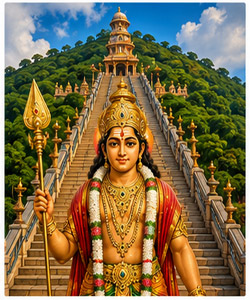
Subrahmanya Swamy Temple
Haripad Sree Subrahmanya Swami Temple
Haripad Sree Subrahmanya Swami Temple is a major Murugan shrine in Haripad, Alappuzha district, Kerala. The temple is dedicated to Lord Subrahmanya, also known as Kartikeya or Murugan, and is regarded as one of the oldest temples in the region. The temple’s official festival documentation describes its architecture as traditional Kerala style and notes that the deity’s image is believed to embody the presence of Brahma, Vishnu and Shiva.
The temple is associated with the legend of the discovery of the Subrahmanya image at Kayamkulam Lake. According to local tradition, the idol was found by fishermen and installed at Haripad, where worship developed into a major pilgrimage. The story is a sacred origin account preserved by devotees. The temple’s large sanctum and traditional compound reflect the regional architectural style, while its ritual calendar includes several annual festivals.
The main festival periods include Chingam, Makaram and Medam, with special observances for Skanda Shashti and Thaipooyam. The annual festival features processions, traditional music and the ceremonial arattu, or ritual bathing of the deity. Devotees come from across Kerala to worship Subrahmanya and seek blessings for courage, health and success. The temple’s daily puja and offerings continue through the year.
Visitors should check the temple’s current schedule, especially during the major festivals, when crowds can be large. The shrine is accessible within Haripad town and is often included in regional pilgrimage routes. Haripad Subrahmanya Swami Temple is significant for its old tradition, its distinctive deity and its lively festival calendar. It remains a major centre of Murugan worship in Kerala, where the story of the idol’s discovery and the ritual life of the temple continue to draw devotees.
The temple’s official festival information records several major annual celebrations, with the Makara Vilakku festival and the Meda festival among the principal observances. The image of Subrahmanya is regarded by devotees as embodying the presence of the Trimurti, an unusual belief that adds to the shrine’s spiritual importance. Haripad is also a traditional centre of temple arts and ritual music, and the festival procession reflects those practices. Visitors should confirm the current calendar locally and allow extra time for darshan on Thaipooyam and Skanda Shashti.
The temple’s location in Haripad makes it a familiar pilgrimage stop for devotees travelling through Alappuzha district.
The annual arattu is a major ritual occasion, with the deity taken in procession and ceremonially bathed.
For Haripad, the shrine is also a centre of community life: devotees come for daily darshan, vow-related worship and the annual cycle of observances, while the surrounding town is known for a cluster of important sacred sites. The temple’s Kerala-style construction, broad grounds and prominent flagstaff express the regional form of temple worship, where the shrine, lamp-lit ritual spaces and festival processions operate as one living institution. Its reputation as Dakshina Palani reflects the importance attached to Subrahmanya worship here, but the temple’s identity is specifically rooted in Haripad’s local traditions and festival calendar. Visitors should distinguish received legend from documented history and follow current temple guidance on darshan, offerings and photography.