

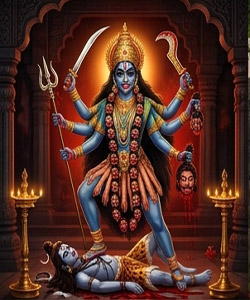
Goddess Gadkalika Temple
Gadkalika Temple
Gadkalika Temple is a revered shrine to Goddess Kalika in Ujjain, Madhya Pradesh. The temple is dedicated to a powerful form of the Mother Goddess and stands near Bhartrihari Caves, within the historic sacred landscape of Ujjain. Devotees come to worship Kalika for protection, courage and the removal of obstacles. The shrine is one of the important Shakti centres in the city, alongside Mahakaleshwar and Harsiddhi.
The temple is strongly associated with the Sanskrit poet Kalidasa. According to local tradition, Kalidasa was once considered unintelligent and received the Goddess’s grace after worshipping at Gadkalika, becoming one of India’s greatest poets. This story has made the temple a place of prayer for students, writers and artists seeking knowledge and inspiration. It is a devotional legend rather than a verifiable account of Kalidasa’s life, but it remains central to the temple’s popular identity.
The shrine’s history is ancient, though the present structure has undergone renovations over time. Daily puja and offerings continue throughout the year, with Navaratri and other Goddess festivals bringing large gatherings. Devotees visit for darshan and special prayers, while many pilgrims include the temple in a circuit of Ujjain’s major religious sites. The proximity to Bhartrihari Caves and other sacred places makes the area a meaningful part of the city’s spiritual geography.
Visitors should check current timings and follow local customs regarding offerings, dress and photography. Festival periods can be busy, especially during Navaratri. Gadkalika Temple is significant for its worship of Kalika, its association with Kalidasa and its position among Ujjain’s historic shrines. It remains an active centre of Goddess devotion and a place where literary memory and religious tradition meet.
The shrine is located near Bhartrihari Caves, a site associated with the sage and poet Bhartrihari, and this places Gadkalika within a broader pilgrimage area of Ujjain. The temple’s association with Kalidasa has made it especially popular with students and writers, who pray for eloquence and insight. Navaratri sees the greatest festival activity, with special offerings and darshan. The temple’s current structure is relatively modest compared with Ujjain’s large monuments, but the devotion to Kalika and the stories surrounding the shrine give it a lasting place in the city’s sacred life.
Its connection with Ujjain’s poets and ascetics adds to the temple’s importance beyond the city’s main Jyotirlinga shrine.
The temple’s Goddess worship is an important part of Ujjain’s broader network of Shakti shrines.
The temple’s setting in Ujjain gives its worship a wider context: the city has long been a major centre of Shaiva and Shakta pilgrimage, and Gadkalika is one of the prominent Goddess shrines alongside the city’s better-known Shiva temples. Devotees worship Kali here as a protective and powerful form of the Divine Mother. The association with Kalidasa is preserved in local religious memory and is an important part of the temple’s cultural identity, though it should be presented as tradition rather than a securely dated historical fact. The annual calendar includes special observances on days sacred to the Goddess, and the shrine remains an active place of prayer rather than simply a literary landmark.