

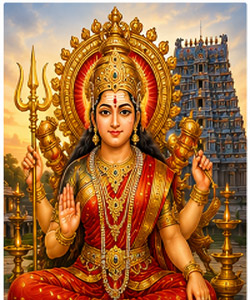
Durga Devi Temple
Durga Kund Temple
Shri Durga Temple, also called Durga Kund Mandir, is a prominent shrine dedicated to Goddess Durga in Varanasi, Uttar Pradesh. The Kashi Official Web Portal describes it as one of the city’s ancient and revered temples and associates the goddess with power and protection. The shrine stands beside Durga Kund, a sacred pond that forms an important part of the setting. The presence of the kund links temple worship with the water-based ritual practices found throughout Varanasi, where ponds, wells and river ghats contribute to the city’s sacred geography. Visitors encounter both the goddess’s shrine and a distinctive water feature within an urban neighbourhood of the old city.
The Kashi portal says the temple is believed to have been established in the eighteenth century. Its description identifies the deity as Durga in a fierce yet protective form, depicted with ten hands holding weapons. The image conveys the goddess’s power to confront harm and protect devotees. As with many temples, specific narratives and ritual understandings may vary among local worshippers, and visitors should receive them as part of a living religious tradition. The portal also describes the temple’s North Indian style, carved pillars and sanctum. The building should therefore be approached with attention to both its architectural character and its role as a consecrated place where worship continues.
Navratri is the major festival specifically associated with the temple in the official description. During the festival, the shrine is decorated and devotees gather for prayer, chanting and ritual worship. The festival’s dates follow the Hindu calendar and therefore shift in the Gregorian calendar each year. Crowd levels and access arrangements can change significantly during Navratri, so visitors should check local notices close to their planned visit. Outside festival periods, the temple remains part of Varanasi’s regular network of shrines, and pilgrims often include Durga Kund in a broader itinerary that may involve other temples, ghats and sacred sites.
The temple is on Durga Kund-Sankat Mochan Road, near Anand Bagh Park, according to the Kashi portal. It lists daily timings from 5:30 in the morning until 10:30 at night, but visitors should confirm current hours before travelling because special observances, public events or local conditions can lead to changes. Streets around the old city can be busy, and the final approach may involve walking. Leave enough time for traffic and for any queues. The portal provides a map link, but a current local map and directions from residents or temple staff may be useful if street access changes.
The Durga Kund itself should be treated with respect. The Kashi portal notes that devotees sometimes perform ritual bathing there before entering the sanctum; visitors should follow posted directions and avoid treating the water body as a recreational area. Modest clothing and quiet conduct are appropriate, particularly around people praying. Photography may be restricted in the sanctum or during worship, so ask before taking pictures. Shri Durga Temple’s importance comes from its Durga worship, the Navratri gathering, its relationship with the sacred kund and its place in Varanasi’s larger sacred landscape. A visit can be meaningful for both pilgrims and those learning about the city, provided that its living devotional character remains central.