

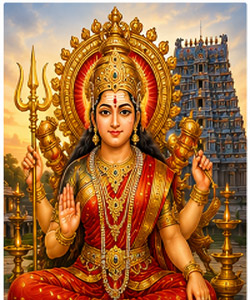
Sixty-four Yoginis Temple
Chausathi Yogini Temple
Chausathi Yogini Temple at Hirapur, near Bhubaneswar in Odisha, is a rare circular shrine dedicated to the sixty-four Yoginis, powerful female divinities associated with Tantric traditions. The temple is one of India’s best-known surviving Yogini shrines and one of two such temples in Odisha. Unlike the tall, enclosed temples that dominate Bhubaneswar’s old town, Hirapur’s sanctuary is low, compact and open to the sky. Its unusual form is central to its ritual and artistic meaning: the circular enclosure gathers the Yoginis around a central sacred space and creates a setting for a distinctive form of goddess worship.
Odisha Tourism dates the shrine to the ninth century and associates its construction with Queen Hiradevi. The temple is built of dark chlorite stone and contains niches for the individual Yogini figures. Each image has a distinct posture, vehicle and expression, offering a remarkable record of sculptural variety. The central pavilion contains figures associated with Bhairava and Mahamaya, the presiding goddess. The careful arrangement of images means the temple is read as a complete sacred scheme rather than as a hall with unrelated statues. The deities embody different aspects of divine feminine power, and their placement around the circle gives the site a coherent ritual structure. The absence of a roof is also significant to the temple’s distinctive character, although descriptions of its symbolism should be understood as interpretation rather than a claim that one explanation is universally accepted.
Hirapur is associated with Tantric worship, a diverse set of religious traditions that developed specialized rituals and understandings of divine power. The word “Tantric” is often used loosely in popular accounts, so it is better to describe what the site directly shows: a circular shrine devoted to a group of female deities, with Mahamaya at its centre and a distinctive iconographic programme. Odisha Tourism notes that the temple was rediscovered in 1953 by historian Kedarnath Panigrahi and subsequently restored. The site’s small scale and rural setting make its survival especially striking, and its protection has helped preserve an important chapter in the history of regional temple art.
The temple remains a place of worship as well as a protected heritage site. Visitors should treat the images and inner precinct with respect, follow local guidance and avoid touching the sculptures. Hirapur is commonly visited as a short excursion from Bhubaneswar, but its significance deserves unhurried attention. The temple is important for its rare open-air circular plan, its ensemble of sixty-four individualized sculptures, and the evidence it provides for the worship of the Goddess in medieval Odisha. It stands apart from Bhubaneswar’s larger stone temples while remaining part of the same broader sacred landscape. For students of architecture, religion or sculpture, Chausathi Yogini Temple offers an unusually direct encounter with a carefully organized world of divine feminine imagery.