

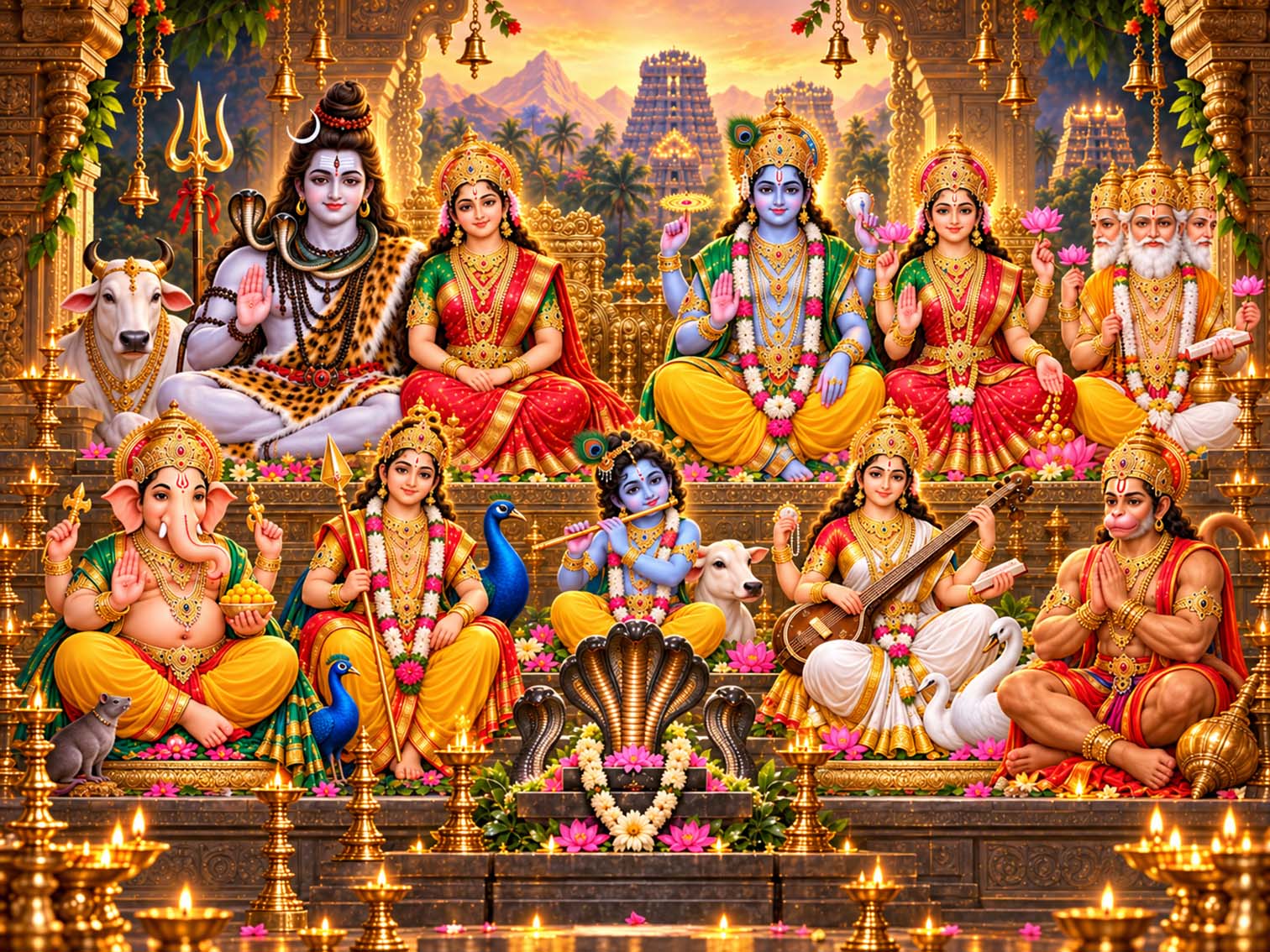
Multiple deities Temple
Char Dham Temple
Char Dham Temple in Ujjain, Madhya Pradesh, is a modern pilgrimage complex that brings together representations of the four sacred dhams of India: Badrinath, Dwarka, Jagannath Puri and Rameswaram. The temple allows devotees to undertake a symbolic visit to these important pilgrimage destinations in one place. It is part of Ujjain’s broader religious landscape, which includes Mahakaleshwar Jyotirlinga and numerous other shrines.
The four dhams are associated with the major directions of the Indian subcontinent and with the sacred journeys described in Hindu tradition. Badrinath is linked with Vishnu in the Himalayas, Dwarka with Krishna in Gujarat, Jagannath with the Lord of Puri in Odisha and Rameswaram with Shiva in Tamil Nadu. The Ujjain complex presents these traditions together, giving pilgrims a place to offer prayers to each deity and reflect on the wider geography of Hindu pilgrimage.
The temple is especially useful for worshippers who cannot travel to all four distant sites. Daily worship and festival observances continue at the complex, and families may visit as part of a circuit through Ujjain. The temple’s design and arrangement of shrines make it easy to move from one representation to another, though the complex should be approached as a place of worship rather than a replica attraction.
Visitors should check current opening hours and festival arrangements locally. The temple is accessible within the city and can be combined with other Ujjain pilgrimage sites. Char Dham Temple is significant because it gathers the symbolism of four major pilgrimage destinations in a single active shrine. It offers devotees a compact way to honour the wider sacred geography of India while participating in Ujjain’s own long-standing religious life.
The Ujjain temple complex is designed for devotees who wish to honour the four dhams without travelling across the country. It brings together the symbols of Himalayan Badrinath, coastal Dwarka, Jagannath Puri and southern Rameswaram, allowing pilgrims to offer prayers in sequence. The complex’s modern character distinguishes it from ancient temples, but its religious purpose is genuine and active. Families may include the visit in a broader Ujjain pilgrimage, alongside Mahakaleshwar and other shrines. Visitors should allow time to worship at each representation rather than treating the site as a quick photo stop.
The temple’s value lies in making these traditions accessible to devotees who are unable to undertake all four long journeys.
The four representations preserve the devotional focus on the north, west, east and south of the subcontinent.