

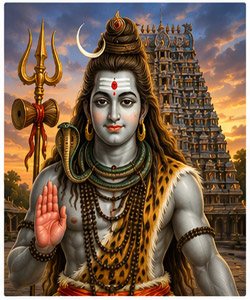
Lord Siva Temple
Vaikom Mahadeva Temple
Vaikom Mahadeva Temple is a major Shiva shrine in Vaikom, Kottayam district, Kerala, and one of the region’s best-known pilgrimage centres. The temple’s importance is reflected in the town’s identity: Vaikom is widely associated with the shrine, and its annual Vaikathashtami festival draws devotees from across Kerala. The temple is revered by Shaiva worshippers and also respected by Vaishnava devotees, giving it a broader place in the state’s devotional landscape. Local tradition regards the Shiva linga as exceptionally ancient; such sacred chronology belongs to faith and should be distinguished from the independently documented history of the temple structure.
The temple complex is a substantial example of Kerala’s traditional sacred architecture. Its low, sloping tiled roofs, timber elements, walled precinct and carefully ordered ritual spaces respond to the local climate and to the customary movement of worshippers around the sanctum. Rather than relying on a soaring northern-style tower, the design emphasizes the horizontal spread of the complex, the prominence of the inner shrine and the circulation of devotees through gateways and courtyards. The setting near the Vembanad lake region places the temple within the waterways and settlements of central Kerala, where pilgrimage has long been connected with local trade, agriculture and community life.
The twelve-day Vaikathashtami festival is the temple’s signature annual observance. It culminates on Ashtami in the Malayalam month of Vrischikam, usually in November or December. The festival includes a sequence of worship, processions and ceremonial events, bringing the temple precinct and town into a shared devotional space. The festival’s long duration allows pilgrims to participate in different stages rather than treating the occasion as a single-day gathering. Dates change with the Malayalam calendar, so current details should be checked with the temple or local authorities.
Vaikom’s public history also includes the Vaikom Satyagraha, a major campaign against caste-based restrictions on access to roads around the temple in the 1920s. That movement is part of the town’s modern social history and should be described with care: the temple is a religious institution, while the satyagraha was a wider struggle for social equality connected with its surrounding public space. Together, the shrine’s continuous worship, its festival tradition and the town’s reform history make Vaikom Mahadeva Temple significant well beyond its immediate neighbourhood.
The festival also creates an occasion for the town’s residents to renew shared ties through service, procession and hospitality to pilgrims. Vaikom is not only a destination reached for a single darshan; for many families it is a recurring place in their annual religious calendar. The temple’s centrality to the town is visible in the way ordinary streets and public spaces become connected to the pilgrimage during the festival season.