

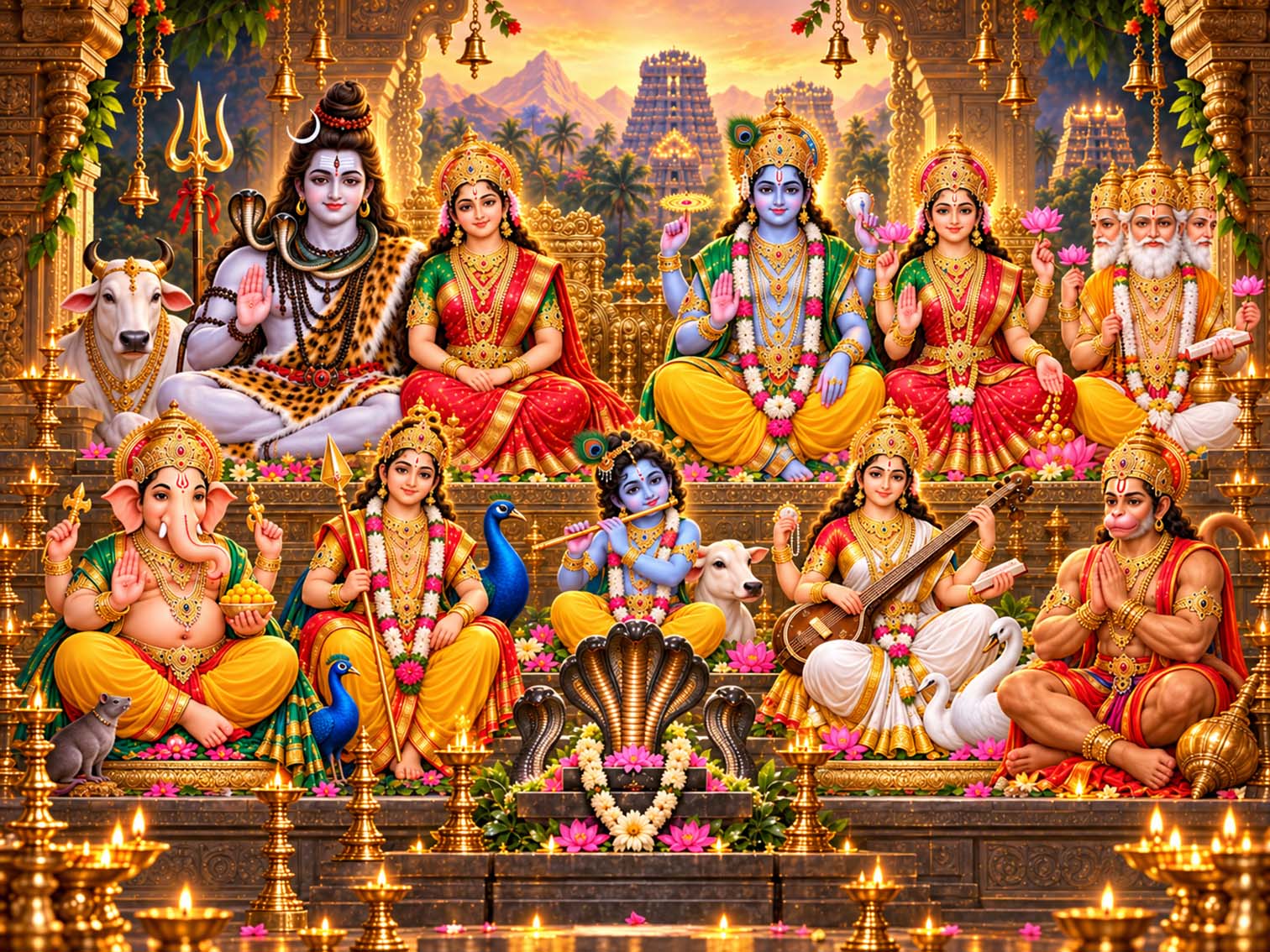
Lord Shiva and Goddess Durga Temple
Unakoti temple shrines
Unakoti is a celebrated Shaiva pilgrimage and sculptural landscape in Tripura, near Kailashahar. Its name is commonly interpreted as “one less than a crore,” and a local legend explains the number through the story of Shiva and a host of deities who were travelling to Kashi. When the others failed to rise in time, Shiva is said to have turned them to stone, leaving one short of the promised crore. The account is a sacred explanation of the name, while the site itself is a remarkable body of rock-cut art created on a wooded hillside. The principal figure is the monumental head of Unakotiswara Kal Bhairava, a form of Shiva whose carved image reaches about thirty feet including its distinctive headdress. Nearby are other large reliefs and smaller sculpted figures associated with the Hindu pantheon, including images of Ganesha and the goddess. The carving is integrated with the natural rock face and the slope, so the visitor encounters the figures as part of a landscape rather than inside a conventional enclosed temple. The scale, workmanship and setting distinguish Unakoti from freestanding temple complexes elsewhere in India. The site is both a protected heritage place and a living pilgrimage destination. Devotees continue to come for Shiva worship, especially during the Ashokashtami fair, when a large gathering visits the complex. The fair links the ancient carvings with current religious practice and brings the surrounding community into the pilgrimage calendar. The stream, forested terrain and stone images contribute to the atmosphere, but the central significance lies in the Shaiva iconography and the enduring belief that this is a sacred place. Unakoti is sometimes called an archaeological site because its most visible features are ancient carvings; that description should not obscure its continued devotional use. Nor should the carvings be reduced to a collection of curiosities: they represent a major religious art tradition in Tripura and a distinctive form of sacred expression. For a visitor, the site offers a rare conjunction of myth, worship, monumental sculpture and natural setting. Its status as one of the Northeast’s most remarkable pilgrimage places rests on these layers together. The Ashokashtami gathering is a particularly important moment because it brings the site’s many images into a shared public religious setting. Pilgrims follow the paths through the carved landscape, make offerings and attend to the central Bhairava image, while local traditions give meaning to the wider group of figures. The carvings are large enough to function as a sacred environment in their own right, and the wooded slope keeps the experience tied to the terrain. This combination of scale, devotion and place is what makes Unakoti unlike a conventional temple visit.