

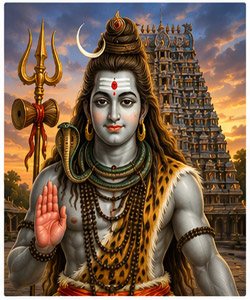
Shiva Temple
Thiruvanchikulam Temple
Thiruvanchikulam Mahadeva Temple is a historic Shiva shrine at Kodungallur in Thrissur district, Kerala. The temple is closely associated with the ancient Chera capital and the Muziris heritage region. Dedicated to Mahadeva, it is one of Kerala’s important Shaiva temples and a living centre of worship. Its history connects regional political traditions, Kerala’s temple architecture and devotional literature, making the shrine significant well beyond its local community.
Kerala Tourism’s Muziris Heritage Project describes the temple as a site associated with the Chera dynasty and notes that it is built in Kerala architectural style. The complex includes a Namaskara Mandapam, a prayer hall supported by sixteen pillars in front of the sanctum. Tradition also links the temple with Cheraman Perumal, a Chera ruler, and the Shaiva saint Sundarar. These associations are important parts of the temple’s historical and religious memory, while precise dates for the earliest structures should be treated with care because the temple has been altered and restored over time.
The temple’s daily worship centres on Shiva, with the sanctum and mandapam forming the core of ritual activity. The temple is also associated with a number of subsidiary deities and observances. Maha Shivaratri and the annual festival are important occasions, drawing worshippers from Kodungallur and neighbouring areas. Festival dates follow the Malayalam calendar; visitors should check the temple or Devaswom notices for the current schedule. The shrine remains active throughout the year, and visitors can observe the rhythm of puja outside peak festival days.
The temple is accessible from Kodungallur and lies within the wider Muziris heritage landscape, which includes other historic religious sites. Visitors should dress respectfully, remove footwear where required and follow rules about access to the inner precinct, offerings and photography. The temple is an active sacred place, so heritage interest should be balanced with respect for worshippers and ongoing ritual. Festival days can be crowded, and local guidance should be followed.
Thiruvanchikulam Mahadeva Temple is significant as a historic Chera-associated shrine, as a notable example of Kerala temple architecture and as a continuing centre of Shiva worship. Its connections to royal memory, devotional tradition and the Muziris region make it a key site for understanding Kerala’s religious history. The temple’s daily rituals keep that history present in the life of Kodungallur. The mandapam’s position in front of the sanctum creates a formal space for devotees to pause, offer prayers and participate in the temple’s ritual sequence before darshan.