

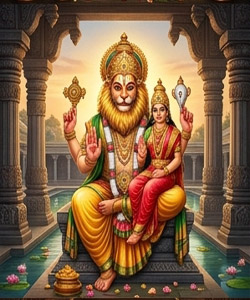
Narasimha Temple
Sri Varaha Lakshmi Narasimha Swamy Temple
Sri Varaha Lakshmi Narasimha Swamy Temple stands on Simhachalam Hill in Visakhapatnam, Andhra Pradesh. The hill rises about 244 metres above sea level, and the name Simhachalam is commonly understood as “hill of the lion.” The temple is dedicated to Vishnu in the combined form of Varaha and Narasimha, worshipped with Goddess Lakshmi. The Visakhapatnam district administration identifies the shrine as one of the region’s major religious places and notes that it attracts large gatherings during its principal festivals. The temple is an active Devasthanam, with continuing worship, sevas and festival observances; recent Chandanotsavam coverage records devotees attending the annual event and receiving darshan of the deity’s uncovered form.
The combined Varaha-Narasimha form gives the temple a distinctive theological identity. Varaha is Vishnu’s boar incarnation, associated with rescuing the earth, while Narasimha is the man-lion form who protects his devotee Prahlada and defeats the demon Hiranyakashipu. At Simhachalam the two forms are united in one image, and the deity is worshipped as Varaha Lakshmi Narasimha. Temple tradition explains the regular sandalwood covering as a way of cooling the deity’s fierce aspect. The sandalwood paste means that on most days visitors do not see the image in its uncovered form. This practice is the basis of the temple’s most celebrated annual observance, Chandanotsavam.
Chandanotsavam takes place on Akshaya Tritiya, generally in April or May, according to the Hindu calendar. On this day the accumulated sandalwood covering is removed for the Nijaroopa Darshanam, the sight of the deity in its unadorned form. After the special viewing, a fresh sandalwood layer is applied for the coming year. The festival is a major pilgrimage event and requires special crowd management because large numbers of devotees arrive for the limited period of darshan. Visitors should rely on current announcements from the Devasthanam for the date, ticketing arrangements and entry procedures; these can change each year. The district administration also lists the Kalyanotsavam and Visakha Poornima among important celebrations, each drawing worshippers to the hill shrine.
The temple’s architecture and layout reflect its long religious and cultural history. The district account describes a Natya Mandapam on the northern side, where the Kalyanotsavam is performed, and refers to stone-built portions associated with the Eastern Ganga ruler Narasimha I. Inscriptions on the temple walls are part of the site’s historical record. The hilltop setting, sculptural details and ritual spaces make the complex both a centre of worship and a significant architectural landmark. The shrine’s prominence is also visible in the surrounding pilgrimage infrastructure and the continued organisation of sevas and festival observances by its administration.
Another important practice is Giri Pradakshina, the circumambulation of Simhachalam Hill. Devotees undertake the route as an act of devotion, traditionally walking around the hill and visiting the temple. It combines physical pilgrimage with prayer and community participation. Participants should check current route guidance and safety instructions, particularly where sections involve road traffic or steep terrain. The temple’s hill location gives the pilgrimage a strong connection to the surrounding landscape, while the inner shrine remains the focus of worship.
Visitors should plan around the temple’s ritual calendar and follow the instructions of temple staff. Ordinary darshan arrangements may differ from festival days, and special events can involve advance booking, restricted access or long queues. Modest dress and respectful conduct are appropriate in the sanctum and active worship areas. The district government’s religious places page is a source for the hill setting, festivals and temple background; current timings and service availability should be confirmed through the Devasthanam or Andhra Pradesh temple services before travel. Sri Varaha Lakshmi Narasimha Swamy Temple remains a major devotional destination because its combined deity, annual sandalwood ritual, hill pilgrimage and continuing worship traditions bring together the sacred stories of Vishnu with the living religious life of Visakhapatnam.