

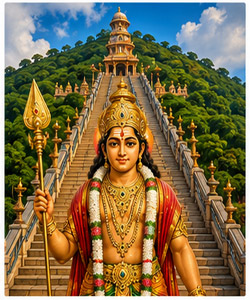
Subrahmanya Temple
Sri Subrahmanyaswamy Temple Skandagiri
Sri Subrahmanyaswamy Devalayam at Skandagiri is a living Murugan temple on a small hillock in Padmarao Nagar, Secunderabad, Telangana. Its presiding deity is Sri Subrahmanyaswamy with Sri Valli and Sri Devasena. The temple’s own history records that a group of devotees formed the Sri Subrahmanya Swamy Aadi Krithigai Laksharchana Committee in 1961 and began organizing the Aadi Krithigai festival in Secunderabad. The decision to build a permanent temple followed this devotional activity. In 1968, Kanchi Paramacharya Chandrasekharendra Saraswathi visited the area and identified the hillock as a suitable place; the landowner agreed to donate the site. The foundation ceremony for the Vinayaka and Subrahmanya shrines took place on 18 May 1968. The main Subrahmanyaswamy shrine was consecrated on Thai Poosam, 22 January 1970. These dates give the temple a documented modern history rooted in local devotion, committee service and support from religious leaders.
The site is not limited to one sanctum. The temple presents itself as a place representing six major Hindu devotional streams described as Ganapatyam, Shaivam, Kaumaram, Shaktam, Vaishnavam and Saumaram. Its listed sannidhis include Sri Sundara Vinayagar, Sri Subrahmanyaswamy, Sri Ekambareswarar with Sri Kamakshi Amman, Sri Jaya Durga and other shrines described by the temple. This range makes the complex suitable for devotees whose family worship includes more than one deity, while the central focus remains Lord Subrahmanya. The official temple account gives specific consecration dates for several shrines and connects them with the continued development of the campus. The layout and sequence of worship are best learned on site, since the temple’s own notices and staff can provide current directions and ritual information.
The annual calendar reflects the central role of Murugan worship. The temple lists Vaikasi Visakham, a nine-day Brahmotsavam in Vaikasi, Aadi Krithikai, Thai Poosam, Maha Skanda Shasti and Panguni Uttiram among its important festivals. During Maha Skanda Shasti, the temple observes a six-day programme and follows it with the Sri Devasena Kalyana Mahotsavam, according to its festival information. Poojas are also performed on the Shasti days of both the waxing and waning lunar fortnights. The Subrahmanyaswamy shrine’s page states that abhishekams are performed daily and homams are usually conducted on Tuesdays; other shrines have their own worship and festival schedules. As Hindu festival dates follow lunar or solar calendars, the Gregorian dates vary each year, and special schedules may alter normal visiting hours.
Skandagiri is meaningful not only as a place of worship but also as a community-built institution. The temple’s historical account describes devotees organizing festivals before the permanent structure existed, the donation of land, the making of the principal images and the later addition of further shrines. It also credits traditional sthapathis and religious leaders with guiding the design and consecration work. Rather than claiming an ancient origin unsupported by the temple’s own record, this history shows how a modern neighbourhood shrine took shape through sustained religious service. Its hillock setting gives the temple a distinct local presence in Secunderabad, while its festivals attract devotees from across the city and surrounding areas.
The temple’s official website publishes current opening hours, contact details, festival notices and seva information. The published routine hours differ by weekday, and the temple notes that they may be extended during festivals or adjusted for eclipses and other circumstances. Visitors should therefore check the official site before setting out, especially when planning a special puja or attending a festival. During crowded observances, follow directions from temple staff, allow time for queues and respect restrictions on photography in worship areas. For devotees visiting Secunderabad, Skandagiri offers daily worship centred on Subrahmanya, a broad set of associated shrines and an annual calendar that brings together Murugan’s major festivals. Its recorded history, active ritual programme and neighbourhood setting make it a prominent devotional centre in the city.