

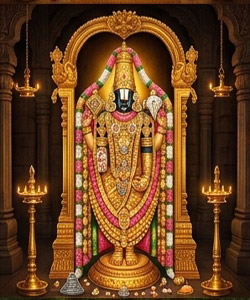
Vishnu Temple
Sri Ranganayaka Swamy Temple Srirangapur
Sri Ranganayaka Swamy Temple stands at Srirangapuram village in Pebbair mandal of Wanaparthy district, Telangana. The district administration identifies it as a historic religious destination dedicated to Ranganayaka, a form of Lord Vishnu. The temple sits beside Ratna Pushkarini, a lake whose presence shapes the setting and adds a water landscape to the pilgrimage experience. The government account dates the temple to the eighteenth century and describes it as an example of Vijayanagara architectural tradition. It also notes that the Rajas of Wanaparthy Samsthanam built the shrine on the bund of the lake, linking the site’s history to the local ruling house and its regional patronage.
The temple’s origin story connects Srirangapur with the celebrated Ranganathaswamy temple at Srirangam. According to the district’s account of local legend, the Vijayanagara ruler Krishnadevaraya visited Srirangam and wished to establish a temple to Ranganayaka in his own kingdom. In the story, Vishnu appeared to the king in a dream and said that an image of the deity lay within his realm; an eagle would guide him to it. The next day, the king followed the bird and found the image between the Kothakota and Kanvayapally hills. The ruler then established the temple near Ratna Pushkarini. This account should be read as a sacred foundation legend preserved by the district source, rather than as a substitute for independently dated construction records. The same government page gives the eighteenth century as the temple’s construction period, so visitors may encounter both a devotional origin story and a historical attribution in descriptions of the site.
The shrine belongs to a group administered as the Sri Krishnadevaraya Group of Temples, which the Wanaparthy administration says also includes temples at Wanaparthy, Peddagudem, Rajanagaram, Kanaipalle and Kothapeta. The temple serves surrounding villages as well as pilgrims from farther away. The district page notes that families use the premises for marriage ceremonies and tonsure rites, showing that the site’s role extends beyond individual darshan: it also hosts important life-cycle observances for local communities. Navaratri, the month-long Kotai Utsavalu associated with Sankranti, and the Rathotsavam are among the major celebrations recorded by the district. The administration reports especially heavy attendance during these periods, so travel plans should allow for queues and traffic, and visitors should verify current arrangements before setting out.
Srirangapur’s location makes the shrine a regional destination. The official information places it roughly ten kilometres from Pebbair and twenty-five kilometres from Wanaparthy, with Gadwal railway station as a nearby rail connection. It lists Hyderabad’s airport as the nearest airport and describes road approaches from Pebbair, Wanaparthy and Kollapur. Distances and transport availability should be checked against current maps and local advice, since conditions and services can change. The district page lists temple hours as 6 a.m. to 8 p.m.; confirm the latest timings if arriving for a festival or special puja.
For a respectful visit, remember that the temple remains an active Vaishnava place of worship. Follow instructions from staff, dress modestly, and ask before photographing worshippers or ritual activity. Ratna Pushkarini, the shrine’s association with Ranganayaka, the Wanaparthy patronage tradition and its village ceremonies together give the temple its distinctive character. Sri Ranganayaka Swamy Temple is both a place for devotion and a focal point of community life in the Srirangapur region.