

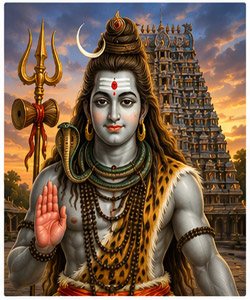
Lord Shiva (Parasurameswar) Temple
Sri Parasurameswar Temple
Sri Parasurameswar Temple is one of the oldest surviving Hindu temples in Bhubaneswar and an important monument in the development of Kalinga temple architecture. It is dedicated to Shiva and belongs to the early medieval period, commonly placed in the seventh century. The temple is in the old sacred quarter of Bhubaneswar, close to Bindusagar and within a landscape that contains shrines from many stages of Odisha’s architectural history. Its compact scale and exceptional survival make it especially useful for understanding the early form of the regional temple tradition before that tradition grew into the monumental structures of later centuries.
The complex consists principally of the sanctum, or deul, and a small assembly hall, often called the jagamohana or nata-mandapa. The tower above the sanctum has the early curving form that became characteristic of Kalinga temples. Its proportions are modest beside later Bhubaneswar monuments, but the building’s carved surfaces are rich and carefully organized. Stone reliefs show deities, guardians, musicians, dancers, animals and scenes from religious life. The sculptural program includes forms of Shiva such as Nataraja and Lakulisa, along with images of the Goddess and other figures. These carvings are not incidental decoration: they express the temple’s religious world and give evidence of the skill and visual language of Odisha’s early stone carvers. Odisha Tourism highlights the temple as a landmark in the evolution of the Kalinga school.
Parasurameswar is an active sacred site as well as a protected historic monument. Worship centres on the Shiva linga in the sanctum, and the temple participates in the annual cycle of Shaiva observances. Maha Shivaratri is among the important occasions for devotees. The visitor’s experience is therefore layered: one can appreciate the age and sculpture of the building, but should remember that people continue to come for prayer and darshan. Appropriate dress, quiet conduct and respect for worshippers help preserve the sanctity of the space. Access to the inner shrine may follow local ritual rules.
The name is traditionally associated with Parashurama, an incarnation of Vishnu, though this sacred association should be understood as part of the temple’s received tradition rather than as a confirmed account of its original construction. The shrine is also a natural stop on a heritage walk through Bhubaneswar’s old town, where it can be compared with later temples nearby. Its significance lies in this combination of continuing worship, early architectural form and unusually legible sculpture. Parasurameswar offers a close view of a formative stage in Odisha’s temple building and demonstrates how a relatively small shrine could carry a sophisticated religious and artistic program.