

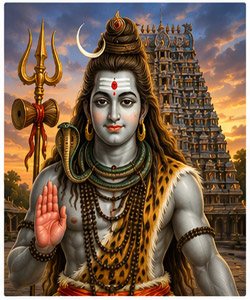
Lord Shiva (Mukteswar) Temple
Sri Mukteswar Temple
Sri Mukteswar Temple is a celebrated Shiva shrine in the old town of Bhubaneswar, Odisha, and one of the finest examples of the mature early Kalinga architectural style. Usually dated to around the tenth century, it is sometimes called a jewel of Odishan temple architecture because of the balance between its compact scale and the precision of its carved work. The temple is part of the historic Ekamra Kshetra, a sacred landscape that includes many Shaiva shrines and the Bindusagar tank. Mukteswar is significant both as a place of worship and as a monument that shows how Odishan builders refined the forms and ornament of earlier temples.
The complex is distinguished by its elegant torana, an arched stone gateway positioned before the main temple. Decorated with sculpted figures, makara forms, floral scrolls and delicate bead-like motifs, the torana is unusual in the region and has become the monument’s most recognizable feature. Beyond it, the temple combines a curving sanctuary tower, a square assembly hall and carefully proportioned exterior walls. Carvings include ascetics, celestial beings, animals and narrative scenes. The decorative program rewards close observation: the figures are integrated into the architecture, framing doors, niches and transitions between the building’s parts. This attention to detail makes Mukteswar an important bridge in the history of Kalinga architecture, joining earlier experimentation to the more elaborate monumental style seen at later temples in Bhubaneswar.
The temple’s name and ritual life are associated with Shiva as the giver of liberation. Devotees visit for darshan of the Shiva linga and participate in the regular cycle of worship and festivals, including Shaiva observances. The temple grounds contain smaller shrines and are used for cultural events, notably the Mukteswar Dance Festival organized by Odisha Tourism. The festival brings Odissi performers into the historic setting and demonstrates a continuing relationship between temple heritage and the classical arts of Odisha. It should not be confused with the temple’s daily religious function: the shrine remains a place of worship, and cultural programming is an additional use of the grounds.
For visitors, Mukteswar is particularly rewarding when approached slowly. The gateway, the transitions into the courtyard, and the carved figures all reveal details that are easy to miss in a quick stop. As an active Hindu temple, it calls for respectful dress and conduct, and access to inner ritual areas may be restricted according to custom. Mukteswar’s importance lies in the unity of architecture, sculpture and devotion. Its torana is a landmark, but the whole complex—not one motif alone—shows the confidence and craftsmanship of the builders. In Bhubaneswar’s wider temple landscape, Mukteswar gives visitors a compact and unusually clear view of the artistry that made the city a centre of Odisha’s sacred architecture.