

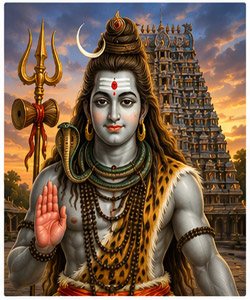
Shiva Temple
Sri Kshetra Dharmasthala Manjunatha Swamy Temple
Sri Kshetra Dharmasthala Manjunatha Swamy Temple is a major pilgrimage centre in Dakshina Kannada district, Karnataka. The temple is dedicated to Lord Manjunatha, a form of Shiva, and is known for its distinctive institutional arrangement: Madhwa Vaishnava priests conduct worship, while the hereditary Jain Heggade family administers the kshetra. The district administration describes Dharmasthala as an unusual meeting point of faith traditions. This blend is part of the site's identity and is visible in the relationship between temple worship, Jain heritage and the institution's charitable work.
The temple's official history recounts a tradition in which the local leader Birmanna Pergade and his wife Ammu Ballalthi welcomed divine messengers and dedicated their home to the worship of the guardian spirits, or daivas. In the account, the daivas later asked the family to establish worship of Lord Manjunatha and to uphold dharma through hospitality and service. The story explains the name Dharmasthala, the abode of righteousness, and the kshetra's enduring emphasis on charity. It is a sacred origin tradition preserved by the temple, not a modern documentary record of every event in the site's development.
The religious life of Dharmasthala centres on darshan of Manjunatha and the observances conducted by the temple. The official site publishes a temple routine and provides information on daily worship and pilgrim services. The institution is also known for free meals offered to visitors. The district administration describes the annual Laksha Deepotsava, held around November or December, as a period when one hundred thousand lamps are lit and religious and literary discourses take place. The precise dates and schedule vary; visitors should check the temple's current notices before travelling.
Dharmasthala is also home to a 39-foot statue of Bahubali on a nearby hill and to the Manjusha Museum, which houses manuscripts, jewellery and religious objects. These sites complement the temple visit and illustrate the kshetra's layered Jain and Hindu heritage. Visitors interested in them should confirm current opening arrangements separately. Pilgrims often stay overnight, and the official temple organization provides accommodation information. Festival periods can be busy, so advance planning for rooms, darshan and seva is helpful.
Dharmasthala lies in the Western Ghats region, around 75 kilometres east of Mangaluru according to the district administration. Road conditions and public transport schedules can change, so travellers should check current information. In the temple precinct, dress respectfully, follow instructions from priests and staff, and maintain a considerate manner in queues and dining areas. Ask before taking photographs inside ritual spaces. Sri Kshetra Dharmasthala is important for its worship of Manjunatha, the unusual partnership of Jain administration and Vaishnava priesthood, its tradition of charity and the annual Laksha Deepotsava. Its continuing religious life makes it a living pilgrimage centre as well as a place of cultural interest. The temple's official channel should be consulted for current routine, seva bookings and event updates, especially if a visitor is travelling during a festival period. The district's summary offers a useful overview but does not replace current notices from the institution. Verify the latest information before visiting.