

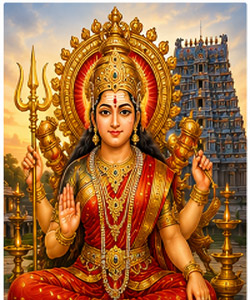
Durga Temple
Sri Kadampuzha Bhagavathy Temple
Sri Kadampuzha Bhagavathy Temple is a renowned Goddess shrine in Malappuram district, Kerala. The presiding deity is Bhagavathy, worshipped in a distinctive form without a conventional idol. The temple’s central object of worship is a sacred hole in the ground, understood as the place where the Goddess’s power is present. This unusual form gives Kadampuzha a special place among Kerala’s Devi temples and draws pilgrims from across the state.
Temple tradition connects the shrine with Adi Shankaracharya. According to the temple’s account, Shankara recognized the divine source in a hole created by Shiva’s arrow when he summoned water to quench Parvati’s thirst. He is said to have established worship at the site, where the Goddess is revered as the power that manifested there. The story explains both the absence of an idol and the temple’s distinctive rituals. It is a sacred account preserved by the temple and should be understood as devotional tradition.
Two offerings are particularly associated with the shrine: Poomoodal, in which the sacred presence is covered with flowers, and Muttarukkal, a ritual performed to remove obstacles. These observances draw many devotees seeking the Goddess’s blessings for family wellbeing, health and success. Daily puja and special offerings continue throughout the year, with Navaratri and other Devi festivals bringing increased activity.
The temple is located in Kadampuzha and has an organized system for offerings and darshan. Visitors should follow the temple’s current guidance, especially for ritual bookings and offerings, and should not attempt to touch or enter restricted areas. The absence of a sculpted image is central to the shrine’s identity: worship is directed toward the divine presence itself. Kadampuzha Bhagavathy Temple is important for its unique mode of worship, its association with Adi Shankara and its continuing role as a major centre of Goddess devotion in Kerala.
The temple’s official material explains that the sacred hole is understood as the source of the Goddess’s presence, so a sculpted image is deliberately absent. Poomoodal and Muttarukkal are among the offerings that distinguish Kadampuzha from other Bhagavathy shrines. The temple has an organized system for devotees who wish to make these offerings, and visitors should confirm current procedures before arriving. These practices, together with the Adi Shankara tradition, give the shrine a distinctive religious identity that continues to attract pilgrims from across Kerala.
Devotees should observe the designated queues and offering instructions during busy festival periods.
Kadampuzha is unusual among major Bhagavathy temples because worship is directed toward a sacred source rather than a conventional sculpted murti. The hole in the ground is understood as the site where Shiva brought forth water for Parvati, and Adi Shankara is said to have recognized the divine presence there. This theology shapes the temple’s ritual offerings and explains why Poomoodal and Muttarukkal are particularly important. The shrine’s official administration publishes information for devotees, who should use the temple’s current procedures when arranging offerings. The distinctive mode of worship is the central reason pilgrims travel to Kadampuzha.