

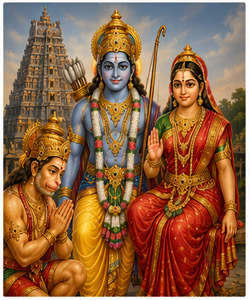
Sree Rama Temple
Sreeramaswamy Temple, Karimpuzha
Sreeramaswamy Temple at Karimpuzha in Palakkad district is a shrine dedicated to Lord Rama. It is also known as Dakshina Ayodhya, or “Southern Ayodhya,” a devotional title that expresses the temple’s special connection with Rama worship in Kerala. The temple is located in Karimpuzha village, in a region where religious practice is closely tied to village life, seasonal gatherings and traditional forms of temple architecture. It remains a place of worship for local residents and attracts pilgrims who come to honour Rama and take part in the annual festival.
Kerala Tourism notes that the main sreekovil, or sanctum, is circular in form. This plan is a notable feature of the building and belongs to the architectural vocabulary of Kerala temples, where the shape of the sanctum, the timber roof and the surrounding enclosure all contribute to the ritual experience. The temple is not best understood through size or monumentality; its importance is devotional and regional. The title Dakshina Ayodhya connects the site to the wider sacred geography of Rama, while its village setting and circular sanctum give it a distinctly Kerala character.
The annual festival lasts eight days and takes place in the Malayalam month of Kumbham, generally falling between mid-February and mid-March. Festival time brings worship, offerings and community participation together, and the temple becomes a focal point for local religious life. Kerala Tourism confirms the festival’s duration and timing, while local temple information provides current arrangements. The programme can vary, so visitors planning a festival visit should check the temple’s current notices. On busy days, patience and respect for ritual spaces are important; processions and puja should not be obstructed for photography or sightseeing.
Rama worship holds a prominent place in Hindu devotional traditions, and a temple dedicated to him offers a focus for prayer, recitation and reflection on the Ramayana. At Karimpuzha, that wider tradition is grounded in local practice and in the annual return of families and devotees to the shrine. The temple is part of Palakkad’s broader network of sacred sites, but its identity remains specific to this village and deity. A visitor can appreciate the circular sanctum and the calm of the temple setting while recognizing that the building is an active religious space.
Sreeramaswamy Temple is significant because it brings together a distinctive form of Kerala temple architecture, an enduring tradition of Rama devotion and an annual festival that gathers the community. Its name evokes Ayodhya, but its ritual life belongs to Karimpuzha. Visitors should approach with appropriate dress and conduct, follow local customs, and allow worshippers priority in the inner precinct. For those exploring the religious history of Palakkad district, the temple offers a clear example of how pan-Indian devotional figures are honoured through deeply local sacred places.