

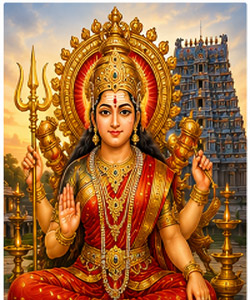
Durga , Navagraha Temple
Sree Irumkulangara Durga Bhagavathi Temple
Sree Irumkulangara Durga Bhagavathi Temple is an old Goddess shrine in Manacaud, Thiruvananthapuram, Kerala. It is dedicated to Durga Bhagavathi and stands near two traditional temple ponds, a feature reflected in the name Irumkulangara. Local explanations connect “irum” with two and “kulam” with ponds, describing a sacred landscape formed around water and the Goddess’s presence. The temple is part of the living religious geography of the state capital and continues to draw worshippers from Manacaud and nearby neighbourhoods.
The presiding deity is revered as a powerful form of the Mother Goddess who protects devotees and grants strength. Daily worship and offerings form the foundation of temple life, while Navaratri and other Goddess-centred observances bring larger gatherings. The temple’s location close to the city allows families to visit regularly, and its pond-side setting offers a quieter devotional atmosphere amid the surrounding urban area. As with many Kerala temples, ritual practice is shaped by local customs and the temple’s own calendar.
The temple is sometimes described as ancient, but precise dates and origin stories differ across accounts. It is more reliable to emphasize the shrine’s established presence in Thiruvananthapuram and its continuing worship than to assign a specific founding year without documentary support. The two ponds are important to the identity and setting of the site, though visitors should follow local instructions regarding their use and access. The temple also belongs to a wider network of Devi shrines in the capital that together support the city’s festival and pilgrimage traditions.
Devotees visit for darshan, prayers and offerings to Bhagavathi, seeking family welfare and protection. During Navaratri, the precinct becomes more active and visitors should expect crowds. Those visiting at other times can observe the daily ritual rhythm and the relationship between the sanctum, temple grounds and ponds. Visitors should respect local dress and photography rules and follow instructions around the inner shrine. Irumkulangara remains significant as an active Durga temple whose distinctive name, water setting and community worship shape its place in the religious life of Thiruvananthapuram.
The temple’s name, orientation and water setting are closely linked: local tradition explains Irumkulangara through the two ponds near the shrine. Water is an important element in Kerala temple practice, used in purification, offerings and the daily maintenance of sacred spaces. The ponds contribute to the precinct’s distinctive character, especially when the city streets around Manacaud are busy. Visitors should use only designated areas and respect any restrictions around the water. The temple’s seasonal observances are set by its own community and may include special pujas during Navaratri and other Devi festivals.