

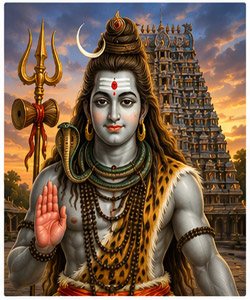
Shiva (Kashi Vishwanath) Temple
Shri Kashi Vishwanath Temple
Shri Kashi Vishwanath Temple is an active place of Hindu worship in Varanasi, Uttar Pradesh. Kashi Vishwanath is one of the twelve Jyotirlingas; its present temple is associated with Ahilyabai Holkar's 18th-century rebuilding in the old city. The shrine is best understood through both its presiding deity and the people who return for darshan, offerings and family observances. Its role in local life is not measured only by architectural scale: a temple can be modest in form and still be the centre of a wide community's vows, festivals and shared memory. Here, the relationship with Shiva provides the focus for prayer and service.
Its wider setting matters. Varanasi is part of Uttar Pradesh's varied sacred geography, where temples connect settlements, routes and seasonal gatherings. People often plan visits around a festival or pilgrimage circuit, while local families maintain more frequent ties through weekly worship and household vows. This mixture of local belonging and regional pilgrimage explains how the shrine can be important even when its history is recorded mainly through community memory. The living tradition is carried by priests, volunteers, devotees, artisans and families who prepare the temple and its offerings.
Local stories should be read in their proper register. Sacred accounts explain the relationship between the deity and the place and are part of how worshippers understand the shrine. They are valuable evidence of living belief, but they do not automatically establish a construction date or a documented historical event. Where inscriptions, administrative records or archaeological study provide firmer dates, those can be distinguished from oral and devotional tradition. This careful distinction protects both the temple's religious meaning and the accuracy of its public history.
The calendar and practice matter as much as historical description. Shaiva worship gives special importance to Maha Shivaratri, Mondays and the month of Shravan, when devotees offer water, flowers and bilva leaves to Shiva. The temple's own annual festival may add local processions or observances. In addition to festival days, worshippers visit for personal milestones, thanksgiving and prayers for family wellbeing. A temple may therefore be busiest at several different times: a public festival, an auspicious weekly day, or a quieter weekday when people come for individual darshan. Dates follow the lunar calendar in many Hindu traditions and can vary from year to year; current notices from the temple or local authorities are the reliable guide for planning.
Shri Kashi Vishwanath Temple is significant because it keeps a particular devotional tradition rooted in Varanasi and connects it to the broader religious culture of Uttar Pradesh. The shrine's local features, its festival calendar and the stories associated with it give worshippers a sense of continuity. For pilgrims, the visit may form one part of a route; for residents, it can be woven into ordinary routines. Both relationships are important. They show how sacred places remain relevant through use, care and community participation rather than through historical age alone.
A thoughtful visit begins by treating Shri Kashi Vishwanath Temple as a functioning religious institution. Follow the customary order of worship, respect the sanctum's boundaries, and give space to processions and people making offerings. If the temple has an annual event, check local announcements because timings and access can change with the ritual programme. The most useful details to notice are the deity, the local tradition, the way worshippers use the precinct and the relationship between the temple and its setting. Together they explain why this shrine matters to people in Varanasi and beyond.