

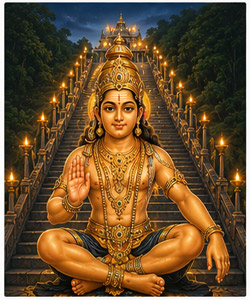
Ayyappan Temple
Sabarimala
Sabarimala Sree Dharma Sastha Temple, set in the forested hills of Pathanamthitta district, Kerala, is one of India’s most prominent pilgrimage centres. The presiding deity is Lord Ayyappa, worshipped as Dharma Sastha. The temple is reached through a demanding pilgrimage that traditionally includes a period of vratham, or disciplined observance, before devotees proceed through Pamba and climb to the hill shrine. This journey and its practices form an essential part of Sabarimala’s religious identity.
Ayyappa is revered as a celibate deity and as the son of Shiva and Vishnu in the form of Mohini in widely known sacred tradition. Devotees undertake a forty-one-day discipline involving prayer, restraint, vegetarian observance and daily worship before the pilgrimage. The traditional route includes bathing or ritual preparation at the Pamba River and ascending the final steps to the temple. The eighteen sacred steps, known as Pathinettampadi, are among the most recognizable features of the shrine; access to them follows specific ritual rules and requires the traditional irumudi offering.
Sabarimala’s principal pilgrimage seasons include Mandala-Makaravilakku, with the opening of the temple for special periods during the Malayalam months of Vrischikam and Dhanu. The Makaravilakku season culminates around Makara Sankranti and draws very large numbers of pilgrims. The temple also opens for other monthly and festival observances according to the official calendar. Because attendance can be exceptionally high, pilgrims should follow current notices from the Travancore Devaswom Board and Kerala authorities regarding registration, routes, health and crowd management.
The pilgrimage represents devotion, self-discipline and equality among devotees, who traditionally address one another as Ayyappa. The forest route and high-altitude setting require preparation and respect for the natural environment. Visitors should confirm current rules before travel, including entry arrangements and seasonal timings. Sabarimala is not merely a hilltop destination: it is a living centre of Dharma Sastha worship whose distinctive vows, journey and communal practice shape the experience of millions of devotees.
Sabarimala’s pilgrimage has detailed rules that can change under current court, board or government directions, so pilgrims should verify the latest official notices before setting out. Registration, route management, health advice and crowd-control arrangements are especially important during Mandala-Makaravilakku. The temple’s forest location also means that devotees should carry back waste and follow instructions intended to protect the surrounding environment. These preparations do not lessen the devotional purpose; they help ensure that the traditional journey can be completed safely and respectfully by the large number of pilgrims who undertake it each season.