

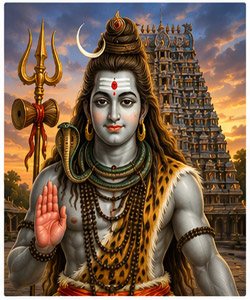
Lord Shiva Temple
Rudreswar Temple
Rudreswar Temple, also called Rudreswar Devalaya, is a Shiva shrine at North Guwahati on the northern bank of the Brahmaputra. Its history is closely associated with the Ahom kingdom. Ahom king Pramatta Singha is credited with constructing the temple in the eighteenth century in memory of his father Rudra Singha, whose cremation took place at this location. The shrine therefore has a commemorative purpose as well as a religious one: it marks a royal memorial through the worship of Shiva, who is honoured here as Rudreswar. The location beside the river is part of the temple’s identity. The Brahmaputra has long connected settlements, pilgrimage places and political centres in Assam, and North Guwahati contains several historically important temples and sacred sites. Rudreswar stands within this wider landscape, near other shrines such as Aswaklanta and Manikarneswar, but it should be understood as its own Shiva temple rather than as a subsidiary of those places. The present temple belongs to a longer sacred history at the site. Archaeological excavations conducted by the Assam Directorate of Archaeology exposed the plinth of an earlier brick-built temple to the northeast of the modern Shiva shrine. This evidence suggests that the area had religious significance before the surviving Ahom-period construction. The remains allow visitors to see how worship at a location can continue through successive structures, even when the original buildings no longer survive. The current temple’s architecture and setting reflect the layered history of North Guwahati, where Ahom patronage, older temple foundations and contemporary worship occupy the same landscape. Devotees come to worship Shiva, while the temple’s association with Rudra Singha and Pramatta Singha makes it important to those interested in Assam’s royal history. The shrine’s significance is heightened by its position near the Brahmaputra and by the concentration of sacred places across the river from Guwahati. Daily puja and major Shaiva observances keep the temple active as a place of worship. For visitors, Rudreswar offers a more focused historical encounter than the region’s largest pilgrimage centres: it combines a royal memorial, an enduring Shiva tradition and archaeological evidence of an earlier temple at the same site. These layers make it a meaningful part of the religious and historical landscape of North Guwahati. The temple’s setting makes it part of a broader riverbank pilgrimage geography rather than a stand-alone monument. Worshippers come for the active Shiva shrine, while visitors interested in history can connect the Ahom memorial tradition with the excavated evidence nearby. The result is a place where religious continuity and historical change are both visible, and where the Brahmaputra setting helps explain the enduring importance of North Guwahati as a centre of sacred activity.