

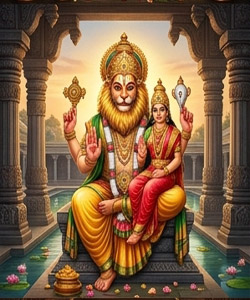
Narasimha Temple
Panakala Lakshmi Narasimha Swamy Temple
Sri Panakala Lakshmi Narasimha Swamy Temple is the hill shrine in Mangalagiri, Andhra Pradesh, dedicated to Lord Narasimha, the protective man-lion form of Vishnu. The name “Panakala” refers to panakam, a traditional sweet drink made with jaggery and water that is offered to the deity. Mangalagiri is known for a group of three Narasimha shrines associated with the hill: the Panakala shrine on its slope, a Lakshmi Narasimha temple at the foot of the hill, and the Gandala Narasimha shrine at the summit. The Andhra Pradesh Endowments Department lists the Panakala Lakshmi Narasimha Swamy Temple among the state’s religious institutions, while the Mangalagiri temple information site publishes its worship and festival details. These sources identify the hill shrine as an active centre of worship.
The defining ritual of this temple is the offering of panakam. The temple’s published service information describes morning archana and a period when devotees can perform special archana and offer panakam. The drink is offered directly to the deity as an act of devotion, and the ritual gives the shrine its distinctive name and character. In the temple’s tradition, the offering is associated with Narasimha’s fiery aspect and the cooling, sweet drink offered by worshippers. Devotees should treat this explanation as religious symbolism, not a medical or scientific claim. As with any active shrine, offerings and access are governed by the temple’s current rules, which may be adjusted during festivals or maintenance.
Mangalagiri’s sacred geography connects the hill shrine with the lower Lakshmi Narasimha temple and the summit shrine called Gandala Narasimha. Local temple information describes the hill temples as distinct places of worship within one larger pilgrimage landscape. Their positions create a sequence for devotees who wish to visit more than one shrine: the panakam offering at the hill temple, darshan at the lower temple, and the summit shrine. The sites have separate access patterns and service schedules, so a visitor should confirm which shrine is open and how to reach it before beginning the climb. The hill setting is central to the experience, but the temple’s spiritual significance rests above all on Narasimha worship and the offerings made by devotees.
The annual Brahmotsavam is the principal festival described for the Panakala Lakshmi Narasimha Swamy Temple. Temple information says the celebration currently spans eleven days, beginning in the bright fortnight of Phalguna, usually in February or March. The programme includes religious observances and a ceremonial wedding of the festival deity with Sridevi and Bhudevi. The same account recounts a traditional connection between the festival and the birthday of Pradyumna, son of Krishna, while describing the observance as one entrusted to Dharmaraja in the sacred narrative. These are elements of the temple’s devotional tradition. Festival dates shift with the Hindu lunar calendar, and the schedule can be revised, so devotees should consult current temple notices before travelling.
For visitors, this shrine is most rewarding when approached with an understanding of its living ritual rather than as a sightseeing stop alone. The panakam offering, morning worship and Brahmotsavam are the features that distinguish it from other Narasimha temples. Mangalagiri is also a town pilgrimage destination near the larger urban centres of Vijayawada and Guntur, bringing both local worshippers and visitors from across Andhra Pradesh. The temple’s published information gives a regular service schedule, but hours and arrangements can change; confirm current darshan times, offering procedures and festival access directly with temple authorities. Dress and behave respectfully, follow the instructions of staff, and allow extra time during major observances. Taken together with the lower and summit shrines, Sri Panakala Lakshmi Narasimha Swamy Temple anchors Mangalagiri’s distinctive hilltop tradition of Narasimha devotion.