

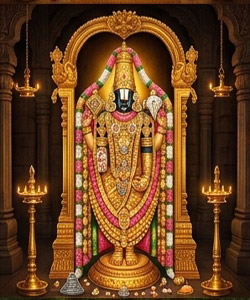
Saraswati, Vishnu Temple
Panachikkadu Dakshina Mookambika Temple
Panachikkadu Dakshina Mookambika Temple is a renowned Saraswati shrine in Panachikkadu, Kottayam district, Kerala. The Goddess is worshipped as Saraswati, the source of learning, arts and speech, and the temple is widely known as Dakshina Mookambika, or Southern Mookambika. The shrine is an important destination for students, families and artists who seek blessings for education and creative work. It remains a place of daily worship and a major centre for Vidyarambham, the ritual introduction of young children to letters.
The temple’s own account traces its tradition through stories recorded in Kottarathil Sankunni’s Aithihyamala and describes the shrine as having more than a thousand years of history. One narrative tells of a Brahmin who was instructed to establish Saraswati worship at Panachikkadu. The exact details belong to local sacred tradition, while the temple’s continuing role in education-related worship is visible today. The name Dakshina Mookambika connects the shrine with Kollur’s Mookambika tradition but does not make it a duplicate of that temple; Panachikkadu has its own iconography, ritual calendar and community history.
The temple is known for its unusual setting and for the way Saraswati is worshipped within a natural landscape. Rather than a highly imposing sanctum, the shrine is associated with a sacred grove and a pond, creating an atmosphere distinct from the larger urban temples of Kerala. The temple complex also includes a Vishnu shrine, reflecting the broader religious fabric of Panachikkadu. The village has other historic religious institutions, and the Saraswati temple forms part of a wider local sacred geography.
Navaratri is the central festival season, with special worship and Vidyarambham ceremonies. On Vijayadashami, families bring children to begin learning by writing their first letters, often guided by a priest or teacher. This practice makes the temple especially meaningful for families and educational communities. The observance is not only symbolic: it expresses the belief that learning is a sacred pursuit and that the Goddess’s blessing accompanies study, music and the arts. Visitors should expect crowds on Navaratri and follow current arrangements for registration and ritual participation.
Panachikkadu Dakshina Mookambika Temple is significant as a major Saraswati shrine, as a centre of Vidyarambham and as a temple whose natural setting and local traditions distinguish it from other Mookambika temples. Its continuing worship connects education, art and devotion. A respectful visit offers insight into Kerala’s practice of treating the beginning of learning as a sacred act, while recognizing the temple as an active community institution.