

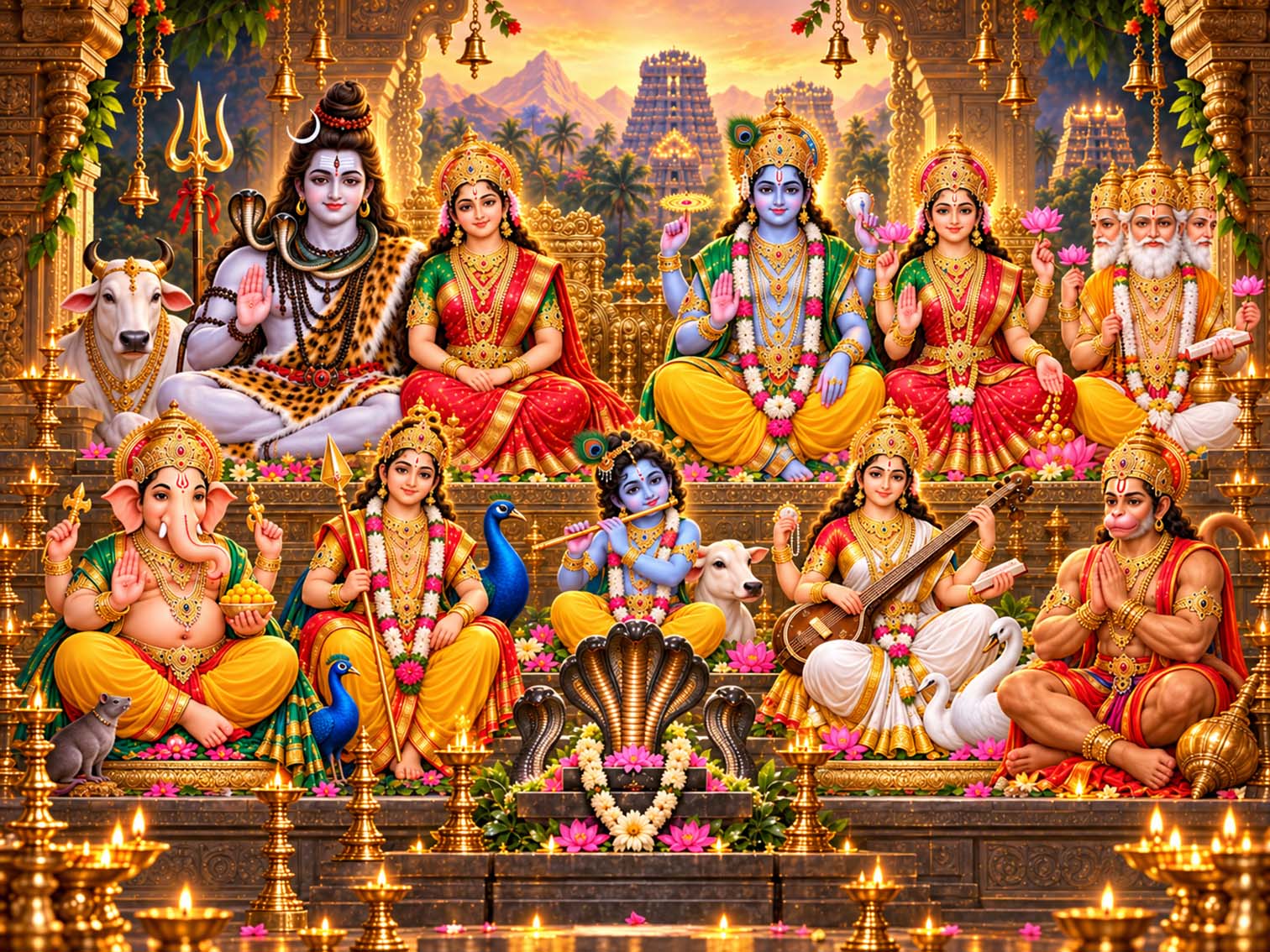
Goddess Narmada Temple
Narmada Udgam Temple
Narmada Udgam Temple in Amarkantak, Madhya Pradesh, marks the traditional source of the Narmada River. The temple is one of the most important pilgrimage sites in the region, where the river emerges from a sacred kund before flowing westward across central India. The Narmada is revered as a goddess, and pilgrims come to honour her at the source and begin or conclude the demanding Narmada Parikrama.
The temple complex includes the Narmada Kund and several shrines dedicated to the river goddess and other deities. According to Hindu tradition, the Narmada was born from Shiva’s body or from his penance, and her waters are believed to be especially sacred. The source area is therefore both a natural spring and a religious sanctuary. The surrounding temples and bathing places form a sacred precinct that has been maintained through generations of pilgrimage.
Narmada Jayanti is the most important annual festival, celebrating the river’s appearance. The temple receives large numbers of devotees during the festival, as well as on Makar Sankranti, Maha Shivaratri and other auspicious dates. Pilgrims offer flowers, lamps and prayers at the kund, and many undertake ritual bathing before beginning a longer journey along the river. The Anuppur district administration identifies the site as one of the area’s main attractions and provides access information for visitors.
Visitors should follow local instructions around the kund and avoid polluting the water. Amarkantak’s forest and highland climate require suitable clothing and travel planning, especially in monsoon or winter. Narmada Udgam Temple is significant as the source of a sacred river and as the spiritual starting point for one of India’s major river pilgrimages. It remains a living centre of worship where reverence for the Goddess and the geography of the Narmada meet.
The Narmada Kund lies within a temple precinct where several small shrines honour the river and other deities. Pilgrims traditionally begin the Narmada Parikrama at Amarkantak, following the river westward to its mouth and returning along the opposite bank. This arduous journey gives the source temple a special role as both origin point and place of blessing. Devotees offer lamps and flowers at the kund, but should avoid throwing non-biodegradable materials into the water. The temple’s annual Narmada Jayanti observance is a major gathering and reflects the river’s identity as a living goddess.
The site is part of Amarkantak’s wider sacred landscape, which includes the origins of the Sone and Johilla rivers.