

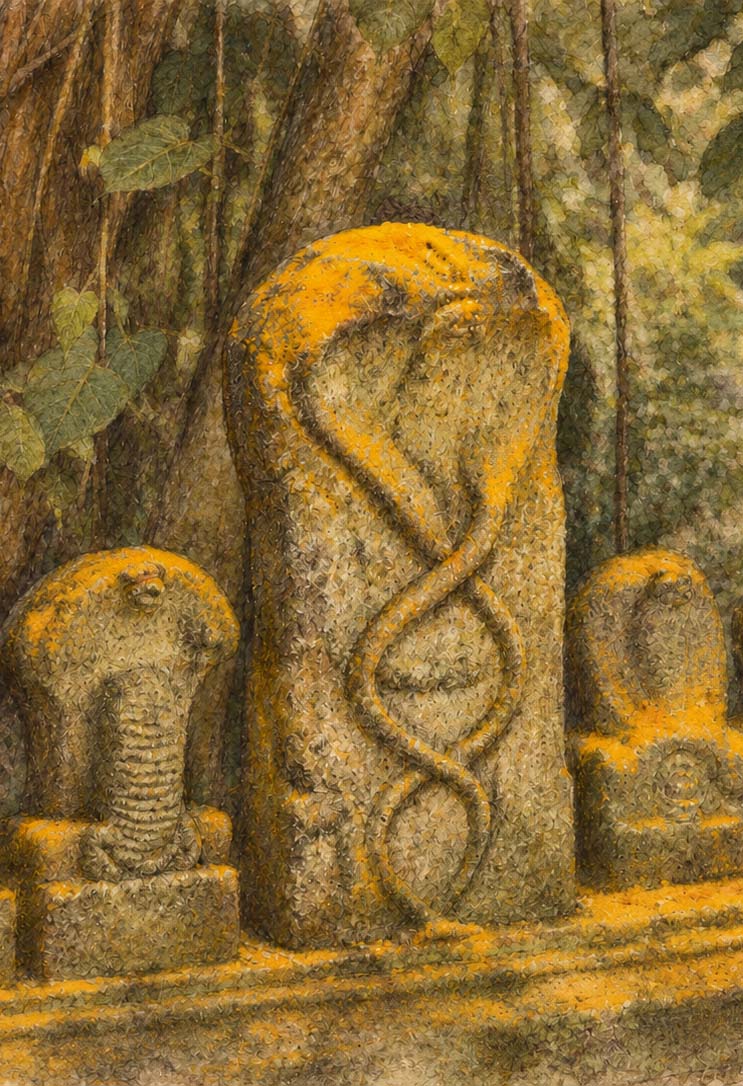
Nagaraja & Nagayakshi Temple
Mannarasala Sree Nagaraja Temple
Mannarasala Sree Nagaraja Temple is a major serpent-worship pilgrimage centre near Haripad in Alappuzha district, Kerala. The presiding deity is Nagaraja, the serpent king, worshipped together with associated serpent goddesses and forms. The temple is set among trees and sacred groves, and its pathways are lined with numerous serpent images offered by devotees. This landscape is not merely decorative: it reflects the belief that serpents are powerful guardians associated with fertility, family wellbeing and protection of the household. The shrine remains an active centre of worship throughout the year.
Mannarasala’s origin story is connected with the sacred account of Kerala’s creation by Parashurama and the need to make the newly reclaimed land habitable for serpents. The temple’s own history also tells of a Brahmin family blessed with a human son and a serpent child regarded as an incarnation of Nagaraja. These narratives are part of the temple’s devotional tradition, not archaeological chronology. They explain the close relationship between the shrine and the Mannarasala Illam, whose priestly lineage has a distinctive role in the temple’s ritual life.
One of the temple’s most notable features is its female chief priest, known as the Valia Amma. This role is unusual among major temples in Kerala and is deeply connected with the sanctuary’s lineage and history. The annual Ayilyam festival in the Malayalam month of Thulam is the principal celebration, when serpent images and offerings receive special worship and devotees gather in large numbers. Rituals include the preparation of sacred designs and offerings according to the temple’s own customs. Visitors should consult the temple’s current calendar because observance dates follow the Malayalam lunar system.
Devotees come for prayers connected with family prosperity, fertility and protection, and offerings often include serpent images that are placed within the sacred precinct. The temple maintains guidelines for offerings and pilgrim conduct; visitors should follow them and respect the quiet character of the grove. Mannarasala is important not only for its association with Nagaraja but also for preserving a distinctive ritual institution within Kerala’s religious life. Its forested setting, serpent iconography, female priesthood and ongoing Ayilyam festival make it one of the most recognisable centres of serpent worship in India.
The sacred grove is central to the atmosphere of Mannarasala. The shaded paths, shrines and serpent images create a worship environment different from a built-up urban temple, and visitors should preserve its quietness and avoid disturbing the images. Local beliefs about snakes are part of a living religious tradition and should be treated respectfully. The temple’s official guidance explains permitted offerings and ritual procedures, especially during Ayilyam, when attendance increases substantially.