

Bhadrakali Temple
Madayi kavu
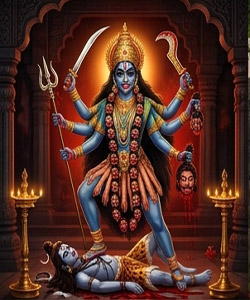
Madayi Kavu is an important Bhadrakali shrine in Madayi, Kannur district, Kerala. The temple is one of North Kerala’s well-known centres of Goddess worship and is closely associated with the legend of Bhadrakali’s victory over the demon Darika. The presiding deity is worshipped as a fierce and protective form of the Mother Goddess, and the shrine has a long-standing place in the ritual and cultural life of the region.
The temple’s sacred narrative follows the wider Bhadrakali tradition: when Darika’s arrogance threatened the worlds, the Goddess manifested to destroy him and restore order. The story is expressed in local worship through the deity’s fierce iconography and ritual observances. Madayi has also been a place where different communities and religious traditions have interacted across centuries, and the grama panchayat notes the temple’s role in the area’s broader social history. This makes the shrine part of both the devotional and cultural landscape of northern Kerala.
Daily puja and offerings maintain the temple throughout the year. The annual festival season brings special rituals and performances, with devotees arriving from nearby villages and other parts of Kannur. Local practices associated with Bhadrakali may differ from those at other Devi temples, so visitors should follow the temple’s instructions rather than assume uniform customs. The shrine remains active and is served by its congregation and ritual specialists.
Madayi Kavu is significant for its Bhadrakali worship, its connection with the Darika legend and its position in a region shaped by centuries of cultural exchange. Visitors should allow time for darshan and respect local rules concerning dress, footwear, photography and access to ritual spaces. The temple offers a clear example of North Kerala’s living Goddess traditions, where mythology, community memory and worship continue to shape the sacred place.
Madayi is a historically layered community where Hindu, Muslim and other traditions developed alongside one another. The temple is an important Hindu shrine within that landscape, and its local history should be understood as part of the region’s wider social experience. During festival periods, ritual specialists and devotees gather for observances particular to the temple. Visitors should seek local guidance about schedules and customs, since Bhadrakali worship in North Kerala has distinctive forms and should not be assumed to follow the same pattern as shrines elsewhere.
The shrine’s annual ritual life helps preserve these local forms of worship and brings generations of devotees together.
The Madayi panchayat’s institutional history explains that the temple’s Bhadrakali consecration is associated with the defeat of Darika and identifies the shrine as one of North Kerala’s well-known temples. The temple’s festival rites are rooted in local practice and may include ritual arts that differ from those at other Devi shrines. This regional character is part of the temple’s significance. Worshippers come to honour the Goddess and to participate in a shared calendar that brings together the surrounding villages. Visitors should ask the temple or local residents about the current festival sequence and follow their guidance during rituals.