

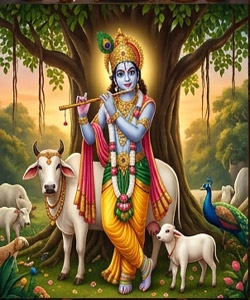
Radha-Krishna (Madan Mohan) Temple
Madan Mohan Temple
Madan Mohan Temple is one of the best-known Krishna shrines in Bishnupur, in West Bengal’s Bankura district. It was built in 1694 by Malla ruler Durjana Singh to enshrine Madan Mohan, a beloved form of Krishna and the tutelary deity of the Malla kings. The shrine belongs to Bishnupur’s celebrated group of terracotta temples, whose architecture developed under the Malla dynasty as the town became an important centre of Vaishnava devotion. Rather than using carved stone, unavailable in the surrounding alluvial landscape, the builders used brick and decorated the exterior with fired-clay panels. The temple follows the eka-ratna form: a square sanctum with a curved Bengali roof and a single tower rising above it. Its walls carry carefully composed terracotta reliefs, including scenes from Krishna’s life and episodes drawn from Hindu epics and devotional literature. The panels are more than surface ornament; they turn the exterior into a visual narrative that worshippers and visitors can read while moving around the building. The temple is associated with the Gaudiya Vaishnava tradition that grew in Bengal after the devotional movement of Chaitanya, and its principal image represents the intimate, personal worship of Krishna that shaped Bishnupur’s religious culture. A local story gives the deity a special place in the town’s memory: during a Maratha attack, the Malla ruler prayed to Madan Mohan, and tradition credits the deity with defending Bishnupur through the Dalmadal cannon. The story is part of local belief rather than a substitute for the temple’s documented history, but it explains why residents regard Madan Mohan as a protector of the town. Worship remains centred on the deity, with daily offerings and seasonal Vaishnava observances. Visitors often see the shrine as part of a wider circuit with Rasmancha, Jor Bangla and Shyam Rai temples; together these buildings show how the Malla court expressed devotion through regional architecture. The temple is significant both as an active religious place and as a major example of Bengal’s terracotta craft. Its location within the historic temple town makes it a useful starting point for understanding Bishnupur’s links among royal patronage, Krishna worship and visual storytelling. The surviving fabric also makes the temple valuable for comparing the eka-ratna design with the region’s other roof forms, including the paired-roof jor-bangla and the multi-towered ratna temples. The shrine’s story is therefore not only about a king’s construction project: it shows how local materials, religious allegiance and artistic skill came together in a durable public monument. A visit can move from the image of Madan Mohan and the temple’s ritual life to the narrative panels on the outer walls, then outward to the wider group of Malla-period temples nearby.