

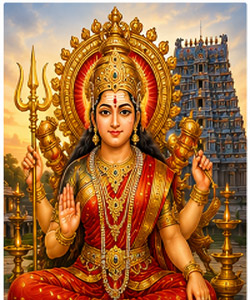
Goddess Manikeswari Temple
Maa Manikeswari Temple
Maa Manikeswari Temple is the principal goddess shrine of Bhawanipatna, the headquarters of Kalahandi district in western Odisha. The presiding deity, Manikeswari, is revered as a powerful form of the Mother Goddess and is closely connected with the history of the former Kalahandi royal house. The temple remains a living centre of worship: people from the town and surrounding villages visit for darshan, daily puja, family vows and festivals. Its importance comes from this continuing relationship between the deity, the region and its people, as well as from the temple’s role in the public culture of Bhawanipatna.
The best-known observance associated with the shrine is Chhatar Jatra, held during the Durga Puja period. The ritual procession carries the goddess’s chhatar, or ceremonial umbrella, through the city. It is a major public event that brings worship, music, offerings and a large gathering into the streets. The procession is not merely a pageant for visitors: devotees understand it as the goddess’s movement among her people and as a moment when the protective power of Manikeswari is made publicly present. The festival’s scale reflects the deity’s standing in Kalahandi and the way royal, civic and community traditions have become intertwined around the shrine. Odisha Tourism identifies the temple and Chhatar Jatra among the defining cultural experiences of Bhawanipatna.
Manikeswari is worshipped within Odisha’s broad Shakta tradition, in which the Goddess is approached as a source of protection, strength and well-being. Local observances give that wider tradition a distinctly Kalahandi expression. Visitors may encounter offerings and ritual practices shaped by the temple calendar and by the participation of local families. As at any active Hindu shrine, the daily pattern of worship is more important to devotees than the building’s appearance alone. A respectful visit should allow space for prayer, follow signs and directions from temple staff, and avoid obstructing rituals, especially during festival days when the crowds are dense.
The temple is also a useful point of entry into the cultural landscape of western Odisha. Bhawanipatna is known for regional crafts, performance traditions and nearby natural attractions, but Manikeswari gives the town a central sacred focus. Chhatar Jatra provides an especially vivid encounter with local religious life, while an ordinary-day visit offers a quieter view of worship and offerings. The shrine’s significance can therefore be understood on several levels: as a place of devotion to the Goddess, as a marker of Kalahandi’s historical identity, and as the centre of a festival that draws the community together. For visitors, this combination explains why Manikeswari Temple is more than a landmark listed on a city itinerary; it is an active institution through which regional memory and present-day religious practice continue to meet.