

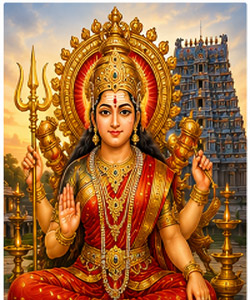
Goddess Chandi Temple
Maa Cuttack Chandi Temple
Maa Cuttack Chandi Temple is the principal shrine of Goddess Chandi in Cuttack, Odisha, and the deity is widely regarded as the city’s presiding mother goddess. The temple stands in the old city near Chandi Chhak and the historic river landscape of the Mahanadi. For residents, it is not simply a monument to visit: worship here is woven into household observances, vows, seasonal festivals and the public religious life of Cuttack. Devotees approach the Goddess as a form of Durga who protects the city and grants strength, wellbeing and courage.
The shrine’s best-known annual observance is the extended Durga Puja period. The temple’s own account describes a sixteen-day sequence beginning on Ashwina Krishna Ashtami and continuing through the Navami and Vijayadashami observances. During this season, the sanctum and surrounding neighbourhood become a focus of worship, offerings and visits by families. Cuttack is famous for its elaborate Durga Puja celebrations, and the temple’s rites belong to that larger civic tradition while retaining their own focus on the resident deity. Navaratri and other days dedicated to the Goddess also draw worshippers throughout the year.
The temple is important for understanding Cuttack’s sacred identity. The city has numerous neighbourhood shrines and public puja mandaps, but Maa Katak Chandi is especially associated with the continuity of worship in the old urban centre. Local devotional traditions speak of the Goddess as an enduring guardian of the city; such accounts express the relationship devotees feel with the deity and should be understood as living religious tradition rather than a dated historical record. The shrine’s active worship, daily offerings and festival calendar give it a role beyond its architectural scale.
A visit is most meaningful when approached as a place of worship. Visitors can observe the customary sequence of darshan and offerings, while respecting the sanctum’s ritual boundaries and the crowds that gather during major festivals. The temple also offers a point from which to appreciate Cuttack’s distinctive blend of neighbourhood devotion and large-scale Durga Puja culture. Its importance rests on the Goddess’s place in everyday life, the annual cycle of worship and the city’s long-standing identification with Maa Chandi.
The temple’s official material also highlights Shohala Besha, the ceremonial sixteen-form adornment of the Goddess, and Mahisamardini Besha, which presents her in the form that overcomes the forces of disorder. These ritual presentations help explain why the annual observance is followed closely by local devotees: the sequence is not just a calendar event but a repeated public expression of the Goddess’s protection and power. Chandi Patha and other devotional recitations are part of the atmosphere of worship. During festival days, visitors should expect larger crowds and allow space for families completing their darshan and offerings. The temple’s identity is thus tied both to daily reverence for Maa Chandi and to the shared festival life of Cuttack.